
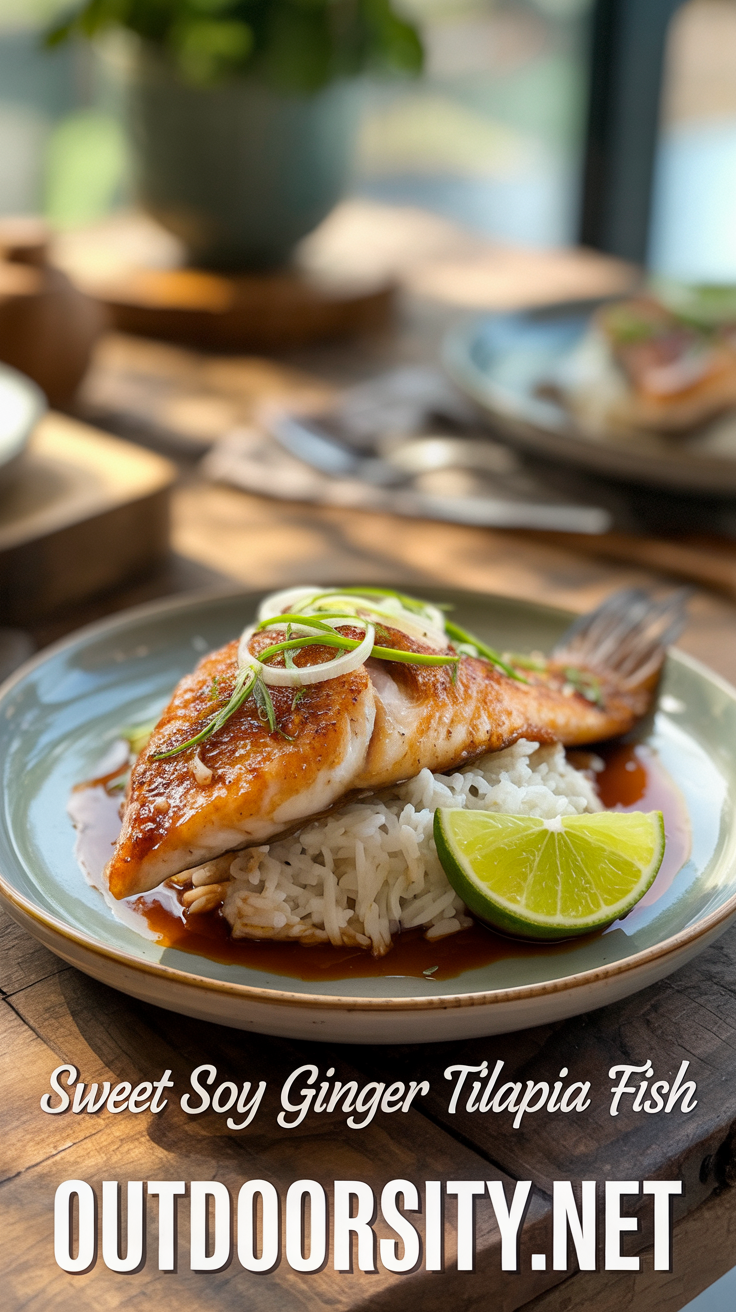
Craving a fast dinner that tastes like a fancy takeout order but costs less than your streaming subscription? Meet sweet, soy, and ginger doing a happy dance on tender tilapia.
You get glossy glaze, flaky fish, and zero stress. But here’s the catch! The catch is literally a fish.
It cooks in one skillet with pantry staples you probably already have. That’s why this feels like a tiny weeknight miracle wearing a sesame seed tux.
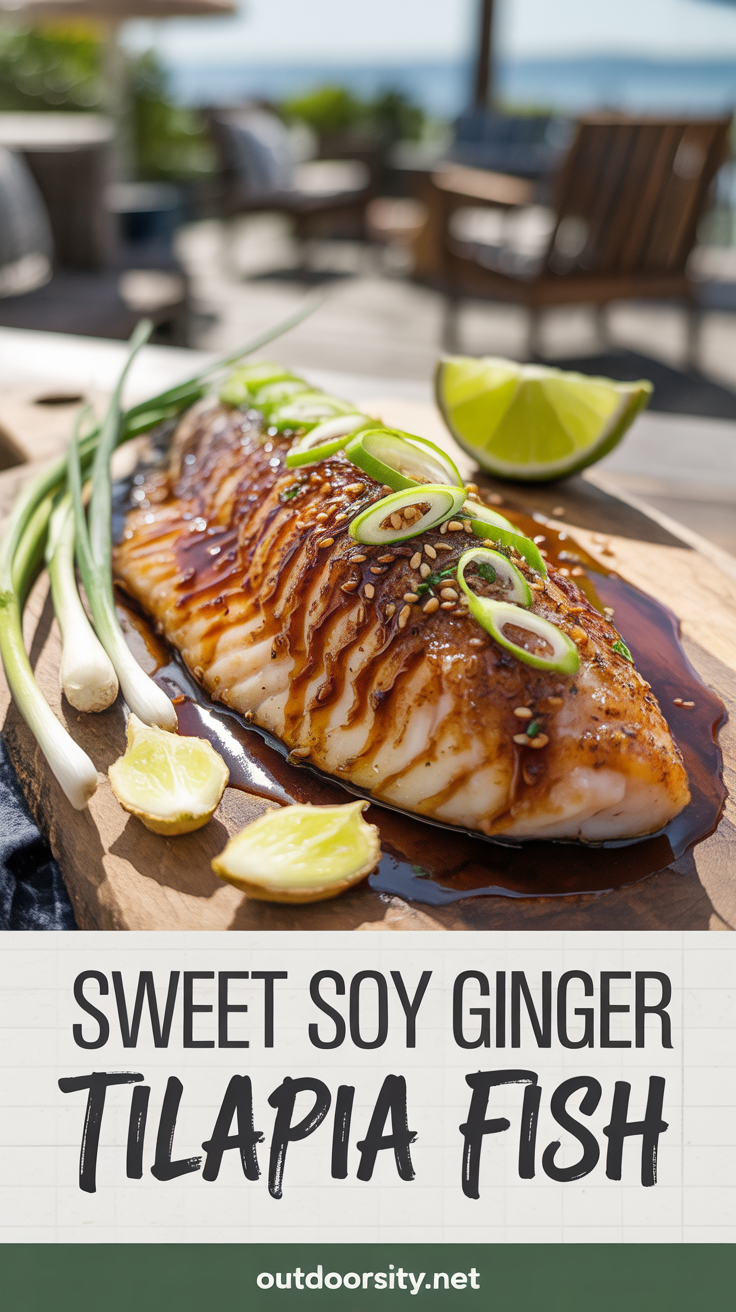
Ready to pan-sear, glaze, and gracefully brag to your group chat? Let’s make Sweet Soy Ginger Tilapia that turns any Tuesday into “whoa.”
Table of Content
Sweet Soy Ginger Tilapia Fish Recipe – At a Glance
- Ready in: about 20–25 minutes total, including prep
- Skill level: beginner-friendly with a touch of gourmet shine
- Serves: 1 hungry person, generously
- Method: pan-seared in a skillet with a stovetop glaze
- Great for: quick weeknight dinners, pescatarian eating, or a simple gourmet moment
Equipment: Must-haves
- Nonstick skillet
- Mixing bowl
- Whisk or fork
- Cutting board
- Sharp knife
- Paper towel
- Measuring spoon set
- Spatula
Equipment: Nice-to-haves
- Microplane zester
- Fish spatula
- Small saucepan
- Basting brush
- Instant-read thermometer
- Rice cooker
- Air fryer
Ingredients
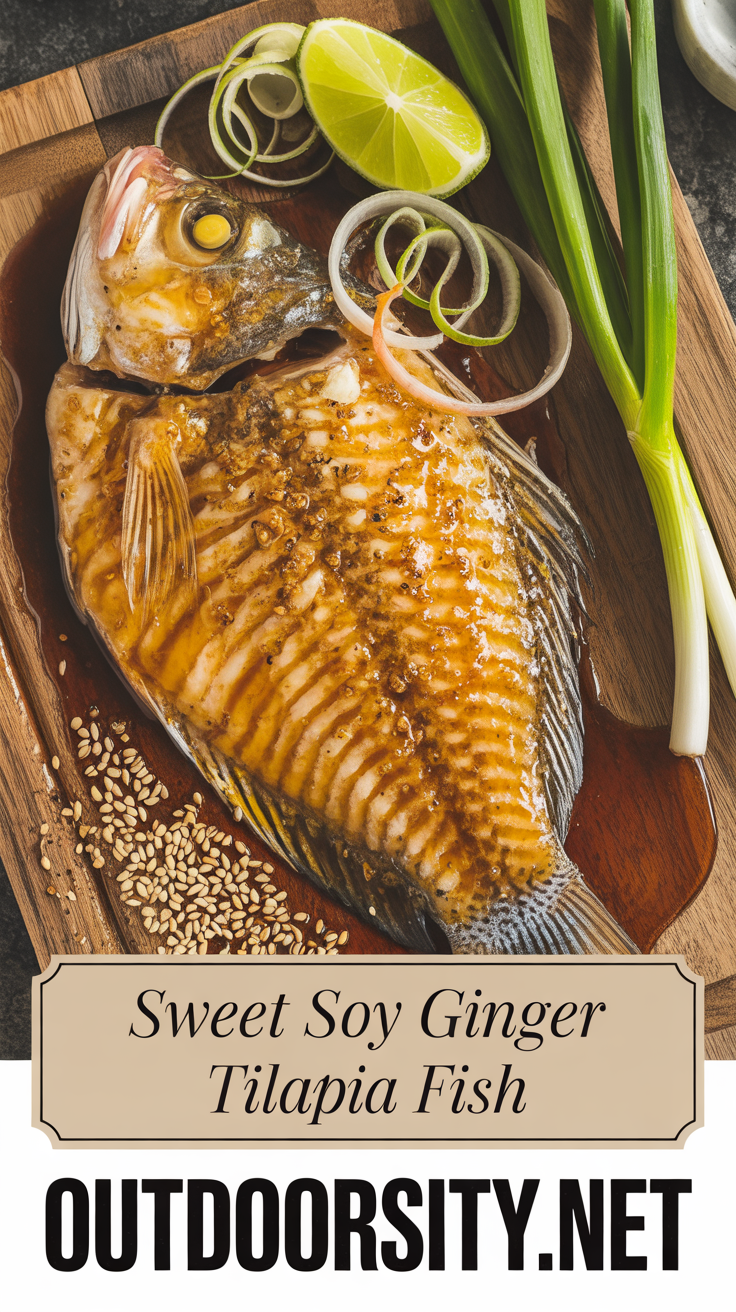
- 1 tilapia fillet (6–8 oz), patted dry for best sear
- 1 tbsp low-sodium soy sauce, for that sweet-salty backbone
- 1 tbsp honey, or enough to make the glaze flirt
- 1 tsp fresh ginger, finely grated for zing
- 1 clove garlic, minced for aroma power
- 1 tsp rice vinegar, for gentle tang
- 1 tsp toasted sesame oil, for nutty perfume
- 1 tsp lime juice, to brighten everything
- 1 tsp cornstarch, to thicken the shiny sauce
- 1 tbsp cold water, for the cornstarch buddy system
- 1 tsp neutral oil, for the skillet
- 1 pinch black pepper, freshly ground
- 1 small pinch kosher salt, only if needed
- 1 tsp toasted sesame seed, for crunch and swagger
- 1 green onion, thinly sliced for a fresh pop
- 1 lime wedge, for serving and extra sparkle
Instructions
- Place a nonstick skillet on the stove and set heat to medium so it’s ready when your fish is.
- Pat the tilapia dry with a paper towel, then season one side with black pepper and, only if needed, a tiny sprinkle of salt.
- On a cutting board, mince garlic with a sharp knife; use a microplane zester if you have it to grate ginger super fine.
- In a mixing bowl, whisk soy sauce, honey, ginger, garlic, rice vinegar, sesame oil, and lime juice until smooth. A fork works if the whisk is on vacation.
- If you want a head start on flavor, brush a little sauce over the fish with a basting brush and let it sit while the pan heats. No need to wait long.
- Add neutral oil to the hot skillet. When it shimmers, lay the tilapia in, seasoned side down. Cook until the edge looks opaque and lightly golden.
- Flip gently with a fish spatula or regular spatula so the fillet stays whole. Be kind; it’s delicate, not a hockey puck.
- Pour the remaining sauce around the fish. Let it bubble so the sugars start to caramelize and the kitchen smells like victory.
- Stir cornstarch with cold water in a small cup to make a slurry. Stream it into the skillet while stirring so the sauce turns glossy and thick enough to coat a spoon.
- Reduce heat to low and baste the fish with the thickening sauce. Cook until the fillet flakes easily with a fork or reaches about 145°F on an instant-read thermometer.
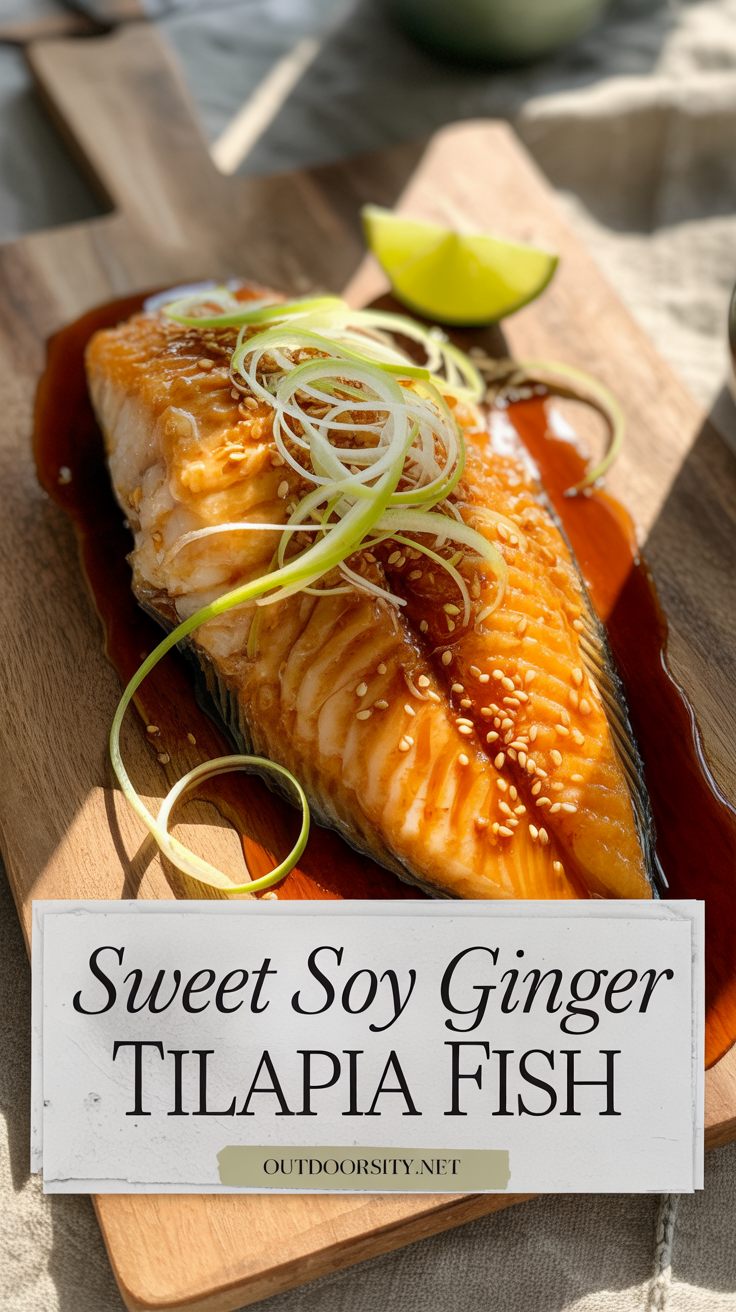
- Transfer the fish to a warm plate. Spoon more sauce on top, then shower with toasted sesame seed and green onion. Squeeze a lime wedge over for a final zing.
- If you like extra glaze, simmer any leftover sauce in a small saucepan for a minute to tighten it up, then drizzle it like you mean it.
- Air fryer option: brush the fish with sauce, cook in an air fryer at 400°F until the center flakes. Warm the remaining sauce in a saucepan and glaze after cooking.
- Cooking rice? Start it in the rice cooker before the fish hits the pan so everything finishes together. Timing high-five.
Substitutions
Need a swap so dinner still happens on time? Here are smart substitutions that keep the flavor party going without drama.
- Use tamari for a gluten-free soy stand-in, or coconut aminos for a sweeter, lower-sodium twist.
- Swap maple syrup for honey if you want a vegan-friendly sweetener for the glaze.
- If fresh ginger is MIA, use ginger paste or a pinch of ground ginger and add a squeeze of lime to brighten it.
- No rice vinegar? Use lime juice or apple cider vinegar for gentle tang.
- If tilapia is unavailable, try a single fillet of cod or haddock with similar thickness so the timing stays friendly.
- Trade cornstarch for arrowroot if that’s what you have; whisk with cold water the same way.
- Out of sesame oil? A touch of peanut or avocado oil adds richness, then finish with an extra sprinkle of sesame seed for aroma.
- Skip green onion and finish with chive or a tiny bit of red onion, sliced super thin so it stays polite.
What to Serve With It
A bowl of jasmine rice catches every drop of glaze like a pro. Brown rice works if you want extra fiber and a nutty vibe.
Add a side of sautéed bok choy or steamed broccoli with a whisper of sesame oil. The greens make the plate look fancy and your body say thanks.
A cool cucumber salad with lime is perfect for contrast. For a sip, try green tea or a crisp white wine, then pretend you own a tiny bistro.
What Else You Should Know
For balanced flavor, use low-sodium soy so the sweet doesn’t get bossed around by the salt. If it tastes too bold, a splash of water or extra lime makes it play nice.
Fresh ginger brings bright heat. If you only have ginger paste, it still works.
Taste as you go so the zing says hello, not HELLO. Tilapia cooks fast, so keep heat at medium and resist wandering off.
A minute can be the difference between silky flakes and “who left the fish in the gym?”
Leftover fish stores in an airtight container for one day. Reheat gently on low heat with a spoon of water so the glaze loosens and the fillet stays tender.
