
Craving takeout-level heat without putting on real pants? Meet spicy Szechuan tilapia, the weeknight hero that brings the tingly, garlicky fireworks right to your stove.
No delivery fee, just flavor. But here’s the catch!
You’ll get that signature mala buzz from Sichuan peppercorn while keeping the fish tender, juicy, and totally chill. It cooks fast.
Like “change into slippers and it’s done” fast. That’s why this one-pan wonder is my go-to when I want dinner that tastes fancy but stays easy.
Table of Content
Spicy Szechuan Tilapia Fish Recipe – At a Glance
- Ready in: about 20–25 minutes total (including prep)
- Skill level: beginner-friendly
- Serves: 1 person
- Method: stovetop sear and simmer in a skillet or wok
- Great for: quick weeknight dinner, pescatarian menu, or a spicy gourmet craving at home
Equipment: Must-haves
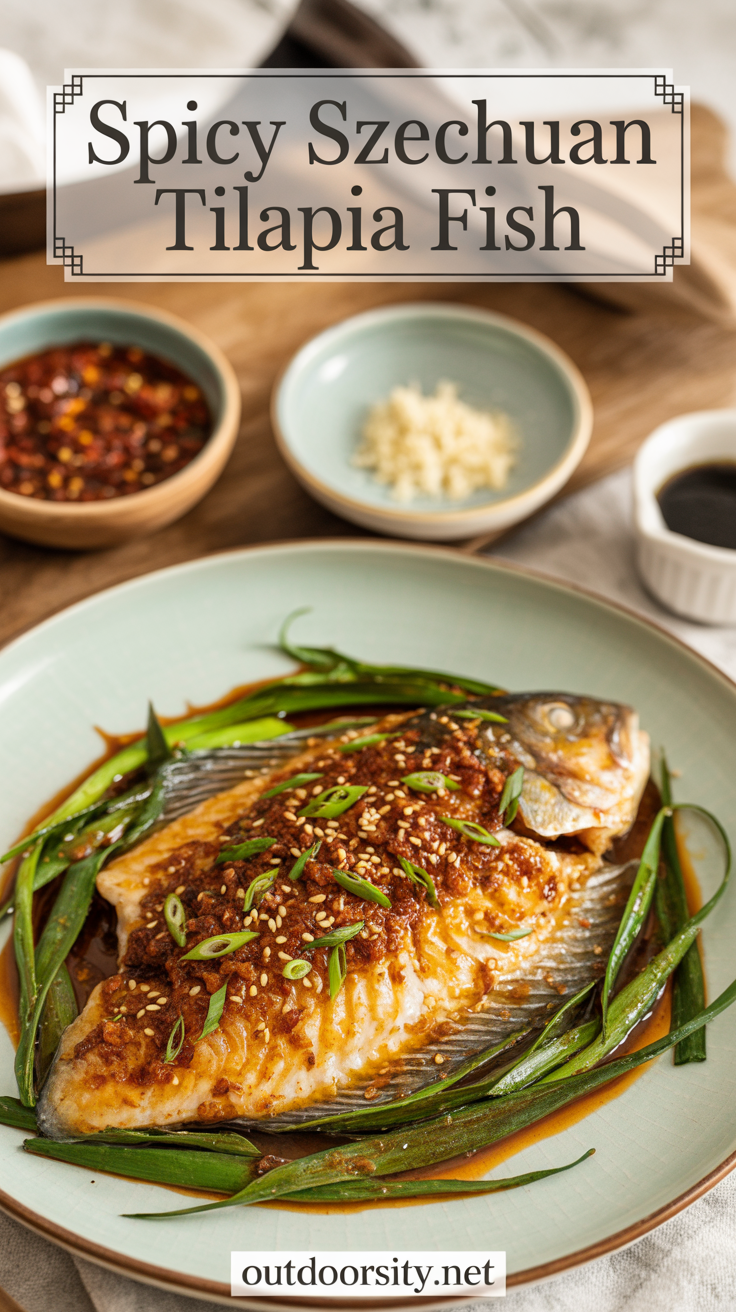
- Nonstick skillet or wok (so the tilapia slides, not sticks).
- Cutting board for safe slicing and minimal drama.
- Sharp knife to tame garlic and scallion like a pro.
- Measuring spoons and a small cup for quick sauce mixing.
- Small bowl to mix a cornstarch slurry without chaos.
- Spatula or tongs to flip the fish gently without breaking it.
Equipment: Nice-to-haves
- Fish spatula for extra-flexy flipping and superhero vibes.
- Mortar and pestle to lightly crush Sichuan peppercorn with flair.
- Microplane for effortless, whisper-thin ginger and garlic.
- Instant-read thermometer to hit a perfect 145°F and avoid guesswork.
- Paper towel to pat the fillet dry and keep the sear snappy.
Ingredients
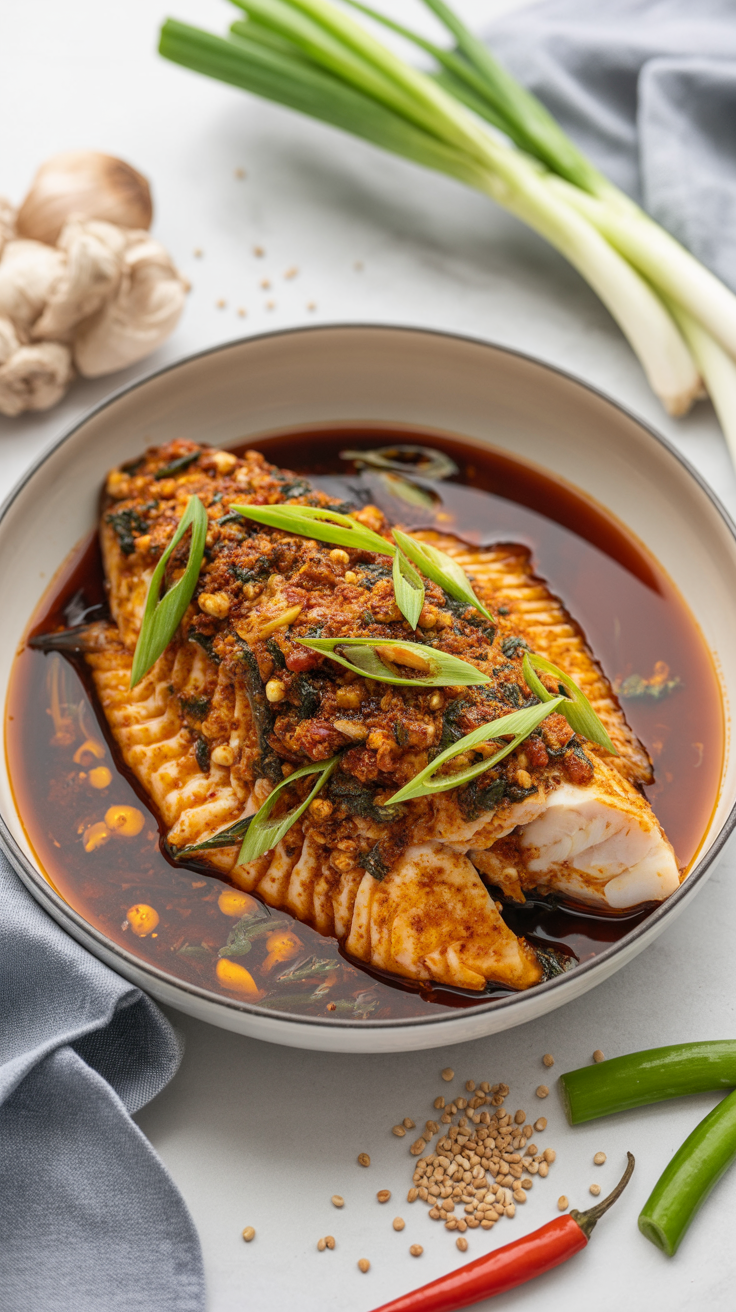
- 1 tilapia fillet (6–8 oz), patted dry
- 1/4 teaspoon kosher salt (for seasoning the fish)
- 1/8 teaspoon black pepper
- 1 tablespoon neutral oil (canola, avocado, or peanut)
- 1 teaspoon Sichuan peppercorn, lightly crushed for the tingle
- 1 tablespoon doubanjiang (Sichuan chili bean paste)
- 2 cloves garlic, minced (the more the merrier)
- 1 teaspoon fresh ginger, grated
- 1 scallion, thinly sliced (whites and greens divided)
- 1/3 cup low-sodium vegetable broth or water
- 2 teaspoons soy sauce (or tamari)
- 1 teaspoon Shaoxing wine (optional, but lovely)
- 1 teaspoon rice vinegar for bright balance
- 1 teaspoon sugar to round out the heat
- 1 tablespoon chili oil or chili crisp for a glossy kick
- 1/2 teaspoon sesame oil to finish
- 1 teaspoon cornstarch mixed with 1 tablespoon water (slurry)
- 1 teaspoon toasted sesame seeds for garnish (optional)
Instructions
- Set the tilapia on a cutting board and pat very dry with paper towel, then season both sides with salt and pepper.
- Lightly crush the Sichuan peppercorn with a mortar and pestle, or under the bottom of a pan on the cutting board.
- Place a nonstick skillet or wok over medium-high heat and add the neutral oil; let it shimmer before you move on.
- Lay the tilapia in the hot pan and sear without moving until the underside is golden and the edge turns opaque, about 3 to 4 minutes.
- Flip gently with a fish spatula or tongs and cook until the center flakes easily and reaches 145°F on a thermometer, about 2 to 3 minutes; transfer to a plate and tent loosely.
- Reduce the heat to medium. Add the crushed Sichuan peppercorn to the remaining oil and toast until fragrant, about 20 to 30 seconds, then push to one side.
- Stir in the doubanjiang and cook to bloom it, about 30 seconds, then add garlic, ginger, and the scallion whites; stir just until aromatic. Do not burn the garlic.
- Splash in the Shaoxing wine if using and scrape up any tasty bits, then add broth, soy sauce, rice vinegar, and sugar; simmer for 1 to 2 minutes so the flavors mingle.
- Stir in the chili oil and sesame oil, then pour in the cornstarch slurry while stirring; cook until the sauce turns glossy and slightly thick, about 30 to 60 seconds.
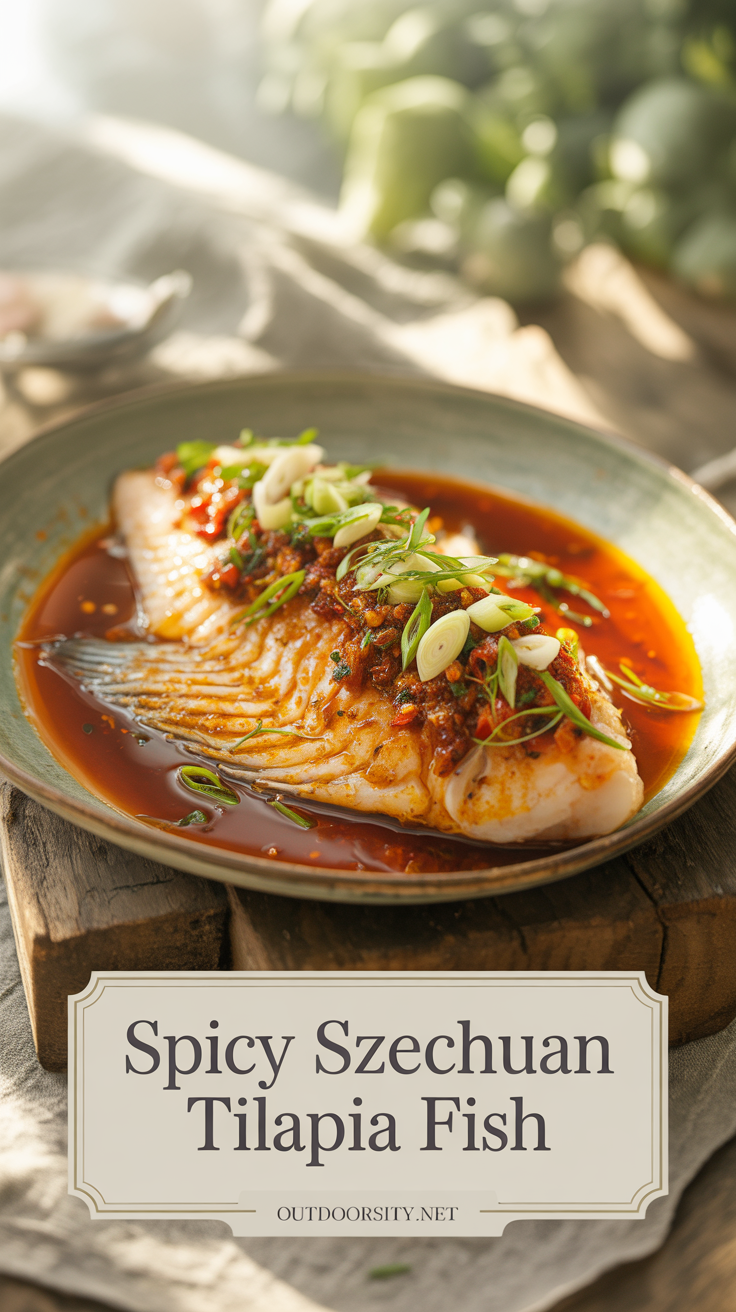
- Return the tilapia to the pan and spoon sauce over the top until coated and happy, about 30 seconds. Plate, shower with scallion greens and sesame seeds, and serve immediately.
Substitutions
Need a swap to fit your pantry or diet? Here are smart, tasty substitutions that keep the spirit of Szechuan heat alive.
- No tilapia? Use another mild white fish like cod, hake, or catfish, and cook just until flaky.
- Avoiding alcohol? Swap Shaoxing wine with a splash of rice vinegar plus broth, or just use extra broth.
- Gluten-free need? Choose tamari and a certified GF doubanjiang; everything else is naturally friendly.
- Can’t find doubanjiang? Use gochujang plus a little soy sauce, or a chili-garlic paste with a pinch of sugar.
- No Sichuan peppercorn? Try cracked black pepper with a touch of lemon zest for a playful faux-tingle.
- Low-sodium plan? Pick low-sodium soy, skip extra salt, and lean on vinegar for brightness.
- Soy-free path? Use coconut aminos and adjust salt to taste; keep the rest the same.
- No chili oil on hand? Warm neutral oil with red pepper flakes for a quick, spicy stand-in.
What to Serve With It
A bed of hot jasmine rice is the perfect sponge for that glossy, spicy sauce. If rice is taking the night off, try nutty quinoa or a bowl of slurpy noodles.
For something fresh and crunchy, add a cool smashed cucumber salad with sesame and rice vinegar. It’s like the chill friend who balances the spice.
Lightly sautéed baby bok choy or steamed broccoli rounds out the plate. A cup of hot jasmine tea or a crisp lager keeps things smooth and civilized.
What Else You Should Know
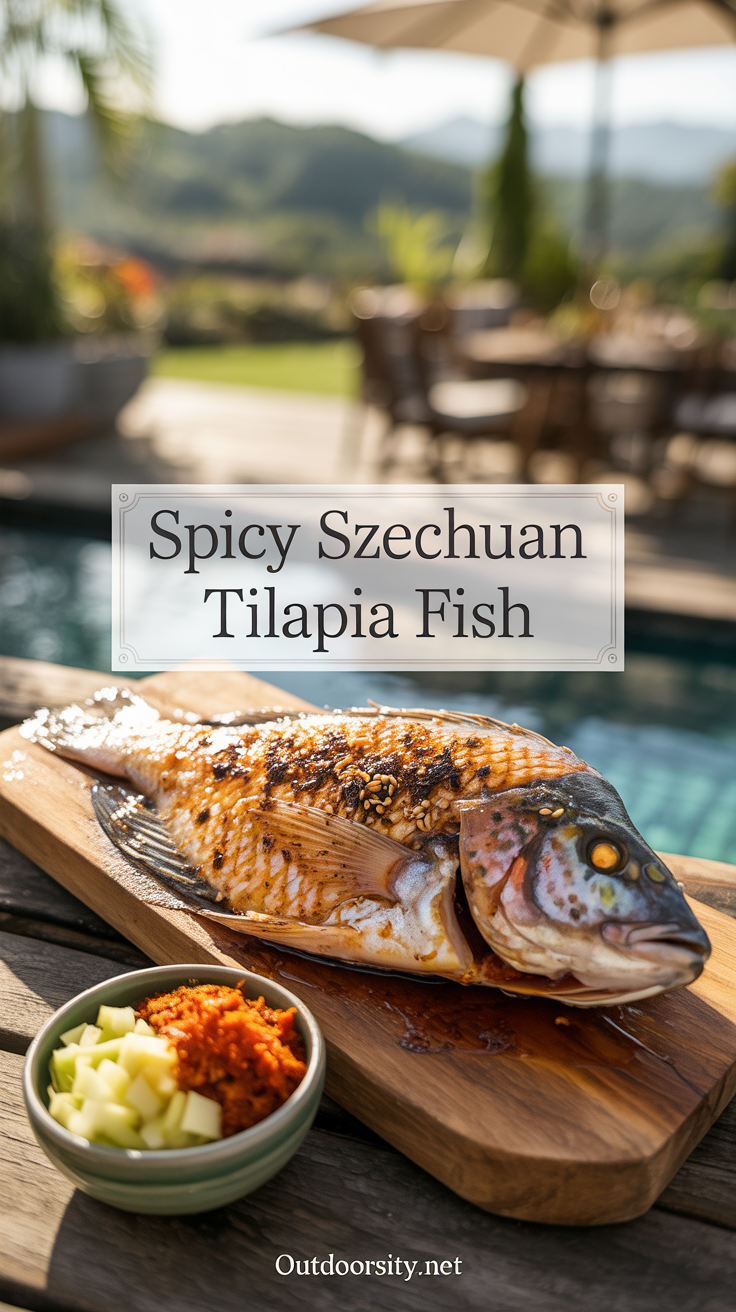
Want the famous mala effect? That tingling magic comes from Sichuan peppercorn, not chilies.
Toast it gently to wake it up, not to send it into witness protection. Doubanjiang is salty by nature.
Taste before adding extra salt, and let the soy sauce do the heavy lifting. But here’s the catch!
Too much and your fish will need a water break. The fish cooks fast, so have your sauce lineup ready.
That’s why a tiny bowl for the cornstarch slurry saves you from sauce panic. Leftover sauce is liquid gold.
Spoon it over rice, roasted veggies, or a soft-cooked egg. Store the fish and sauce in a sealed container for a day, then rewarm gently so it stays tender.
