
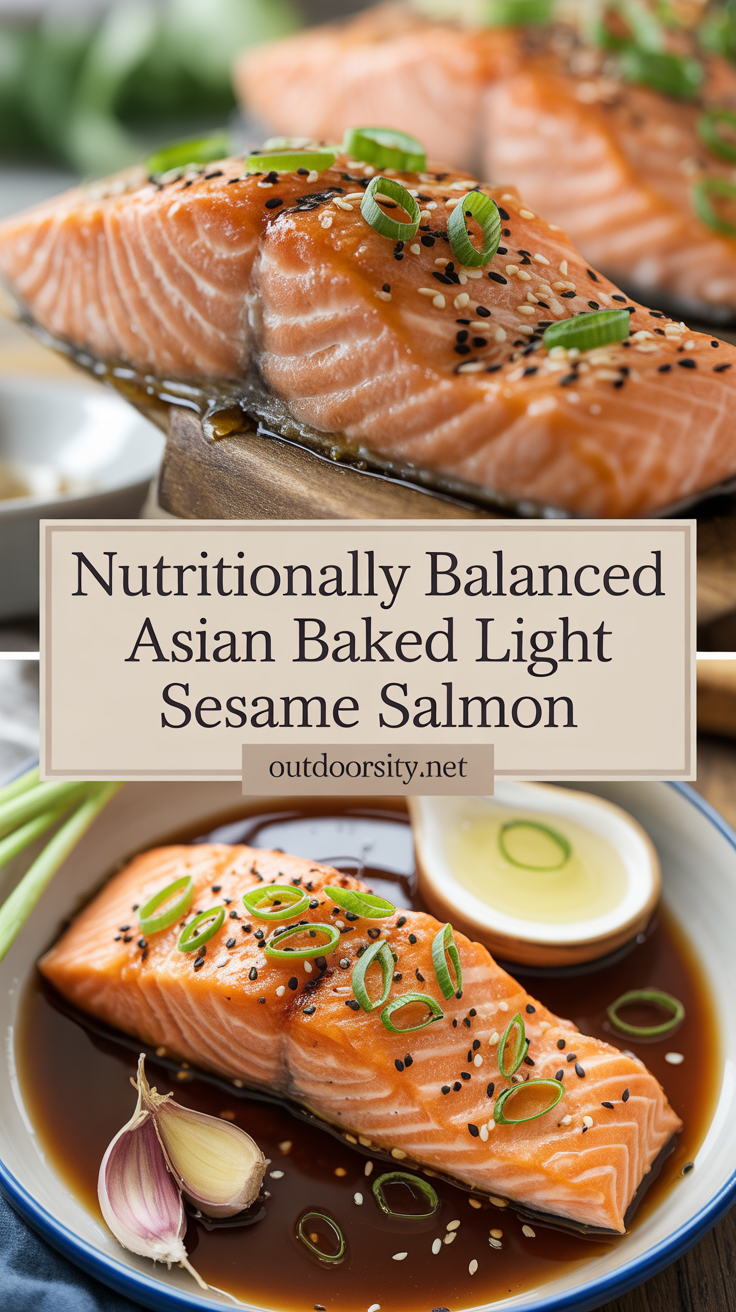
Craving something healthy that tastes restaurant-fancy but won’t eat your evening? Try a simple, nutritionally balanced Asian baked sesame salmon that feels indulgent and is actually good for you.
This recipe is made for one salmon fillet, so no awkward family negotiations about portions.
Quick, clean, and low-fuss—just how dinner should be.
But here’s the catch! It’s bold on flavor and gentle on effort.
That’s why this makes a perfect weeknight win or solo dinner that feels celebratory.
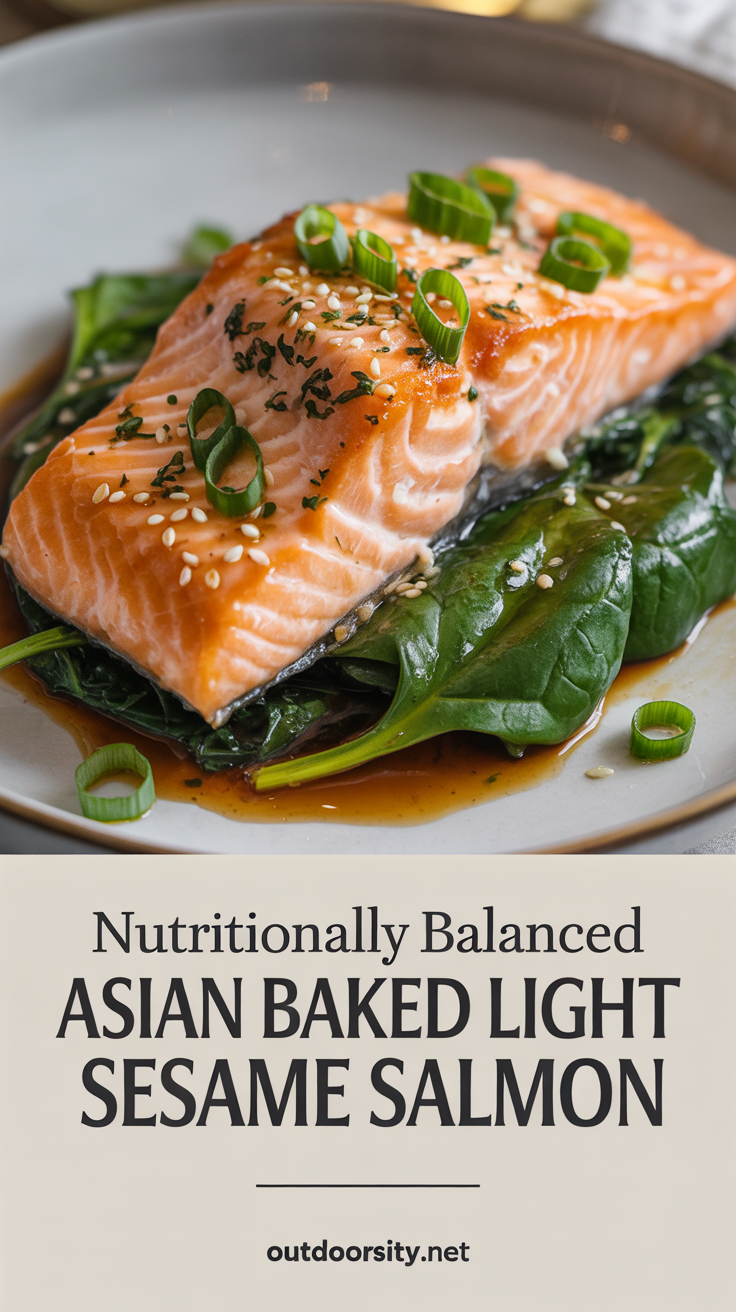
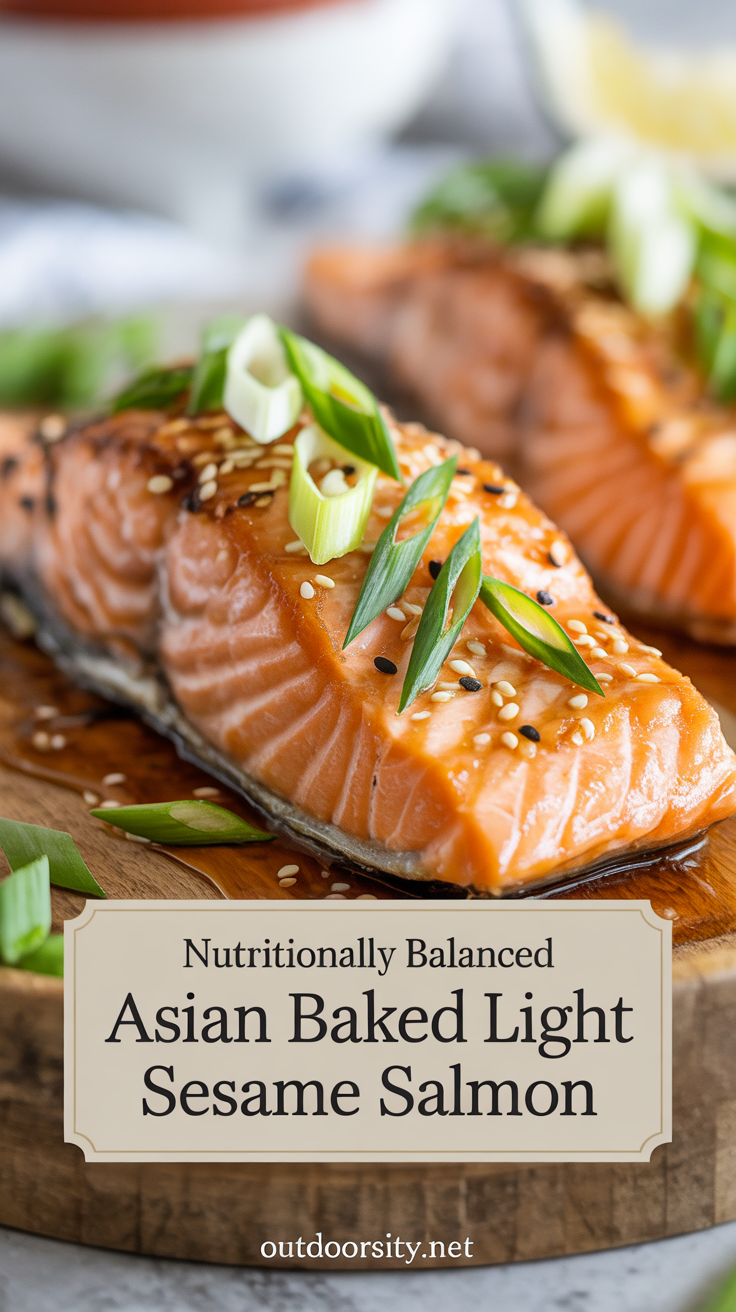
Follow a few short steps and you’ll have a flaky, glazed fillet with a crunchy sesame finish and a side of greens that actually wants to be eaten.
Table of Content
Equipment: Must-haves
- Oven (for baking)
- Baking sheet lined with parchment (to catch glaze and keep cleanup easy)
- Small bowl (for marinade)
- Measuring spoons
- Silicone brush or spoon (to glaze)
- Knife and cutting board (for mincing and slicing)
- Oven mitt
Equipment: Nice-to-haves
- Wire rack (to lift the fillet for crisper skin)
- Instant-read thermometer (for perfect doneness)
- Fish spatula (for gentle transfer)
- Small whisk (for faster emulsifying)
Ingredients
- 1 salmon fillet (6–8 oz), skin-on and pin-boned if possible
- 1 tablespoon low-sodium soy sauce or tamari (for umami)
- 1 tablespoon rice vinegar (for brightness)
- 1 tablespoon honey or maple syrup (for a light glaze)
- 1 teaspoon sesame oil (toasting aroma)
- 1 garlic clove, minced (or pressed)
- 1 teaspoon fresh ginger, grated (or ground ginger as backup)
- 1 teaspoon toasted sesame seeds (for crunch and visual pop)
- 1 scallion, thinly sliced (for freshness)
- 1 teaspoon neutral oil (to lightly coat the baking surface)
- 1 pinch flaky sea salt (finish)
- 1 pinch black pepper (freshly ground)
- 1 lemon wedge (to squeeze over at the end)
- 1 cup baby bok choy or mixed steamed greens (for serving)
- Optional: 1/2 teaspoon chili paste or sriracha (if you want heat)
Instructions
- Preheat the oven to 400°F and line a baking sheet with parchment paper.
- If using a wire rack, place it on the baking sheet and very lightly brush the surface with neutral oil.
- In a small bowl, whisk together the soy sauce, rice vinegar, honey, sesame oil, minced garlic, and grated ginger until glossy; add the optional chili paste if you like heat.
- Pat the salmon fillet dry on the skin and flesh sides with paper towels—dry skin is the secret to texture.
- Place the fillet skin-side down on the prepared baking surface or wire rack and spoon a thin layer of the glaze over the top of the flesh; reserve a little glaze for finishing.
- Let the fillet rest at room temperature for a few minutes so the flavors settle and the glaze clings to the fish.
- Slide the baking sheet into the center of the preheated oven and bake until the flesh is opaque and flakes easily with a fork, about 10–12 minutes depending on thickness; check earlier for thinner fillets.
- If using an instant-read thermometer, aim for an internal temperature of about 125–130°F for medium (or follow USDA guidance for higher temperature if you prefer fully cooked).
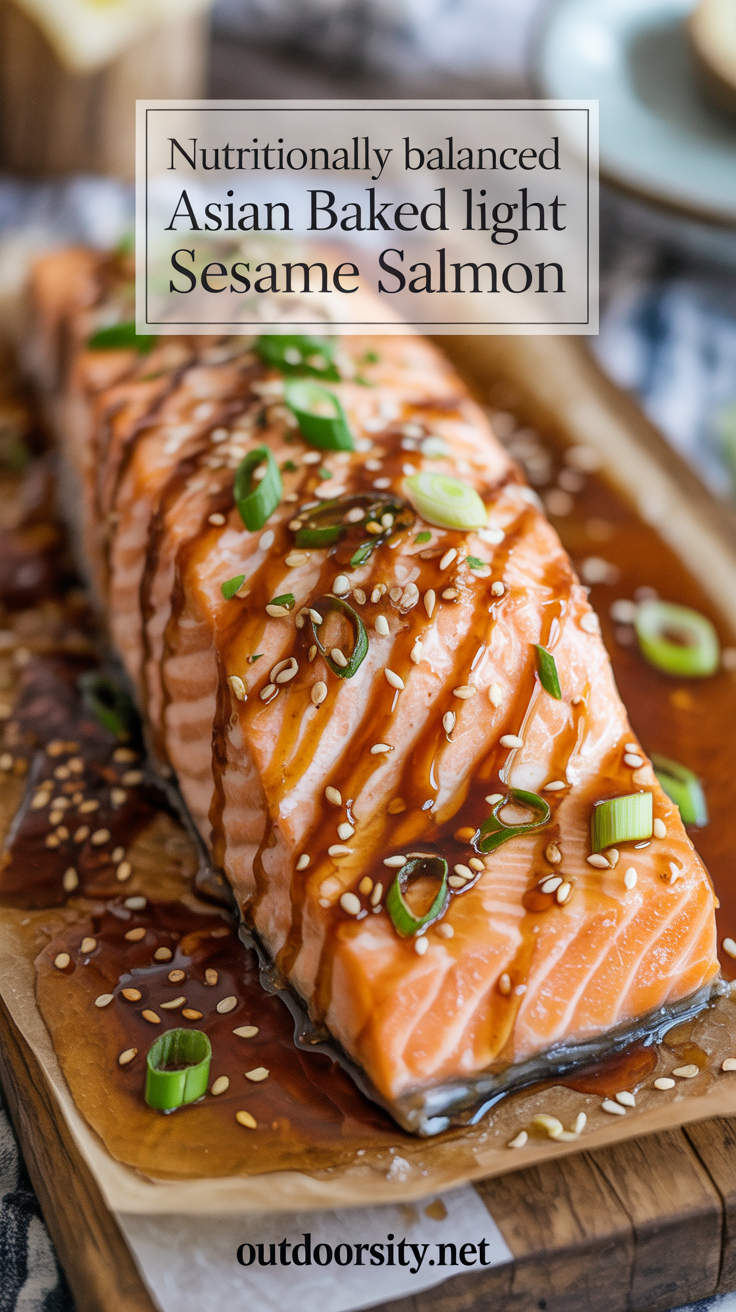
- Remove the fillet from the oven and immediately brush with the reserved glaze for a shiny finish.
- Sprinkle the toasted sesame seeds and the sliced scallion over the glazed fillet.
- Squeeze the lemon wedge over the fillet for a bright lift just before serving.
- Let the fillet rest a few minutes to allow juices to settle so each bite is moist and not runaway-drippy.
- While the fish rests, quickly steam or wilt the baby bok choy or greens until tender and season lightly with salt and a splash of the remaining glaze if desired.
- Transfer the fillet to a plate and serve with the warm greens alongside; enjoy with chopsticks or a fork and zero judgment.
What Else You Should Know
Tips: Always pat the salmon dry before glazing to help the glaze stick and to keep the skin from steaming.
Marinating for a short time is fine, but long acid-based marinades can firm the flesh—so keep it brief.
Variations: Swap the honey for maple for vegan-friendly dining if you use a plant-based fish alternative, or replace soy with coconut aminos for lower sodium.
Serving suggestion: Plate the fillet on a bed of brown rice or cauliflower rice to keep the meal balanced and add extra vegetables for fiber and color.
Nutrition note: This single-filleted serving delivers omega-3 fatty acids, lean protein, and a modest dose of healthy fats—perfect for a balanced plate without feeling like a lecture from a dietitian.
Food safety: If you prefer your fish cooked to a higher temperature, follow USDA guidance; an instant-read thermometer takes the guesswork out of doneness.
That’s why this dish is great for a busy weeknight: minimal fuss, maximum flavor, and a sensible nutrient profile that actually sticks to your dinner plan.
