
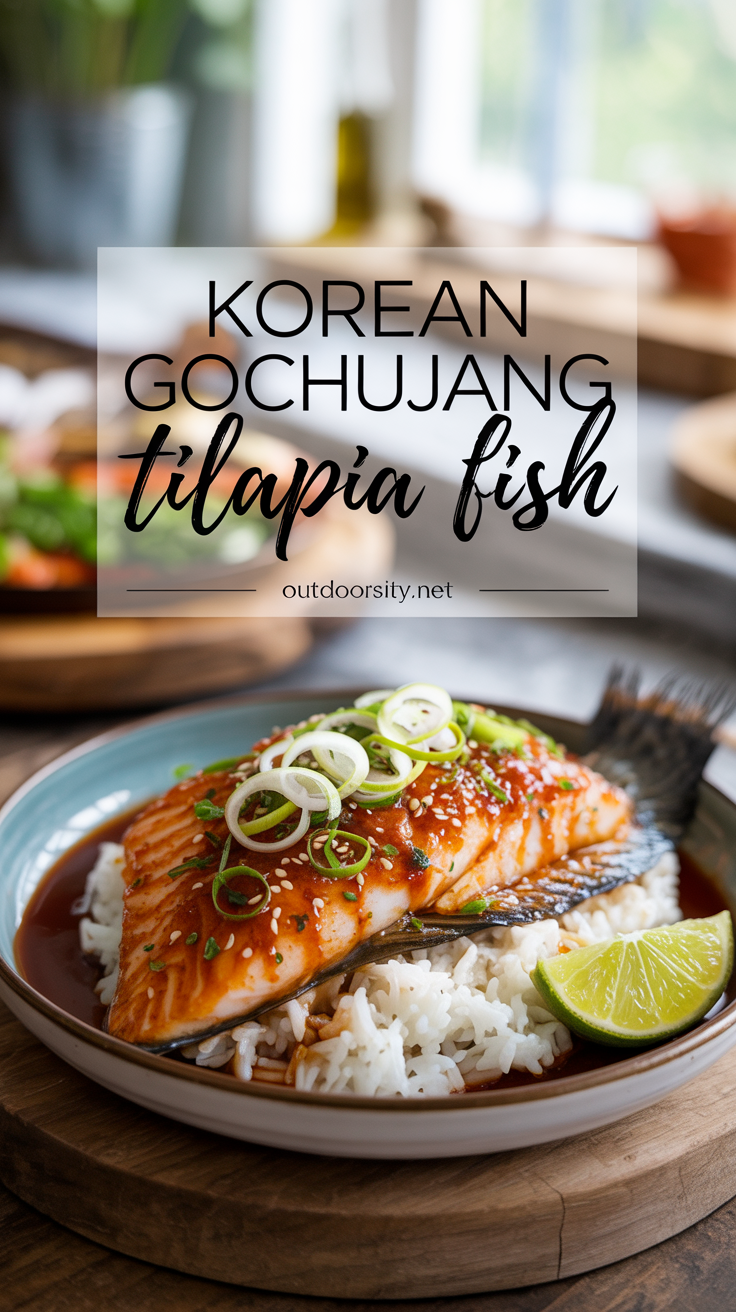
Craving something bold, fast, and a little spicy but your patience is on vacation? Meet gochujang and tilapia, the dynamic duo that turns a sleepy weeknight into a victory lap.
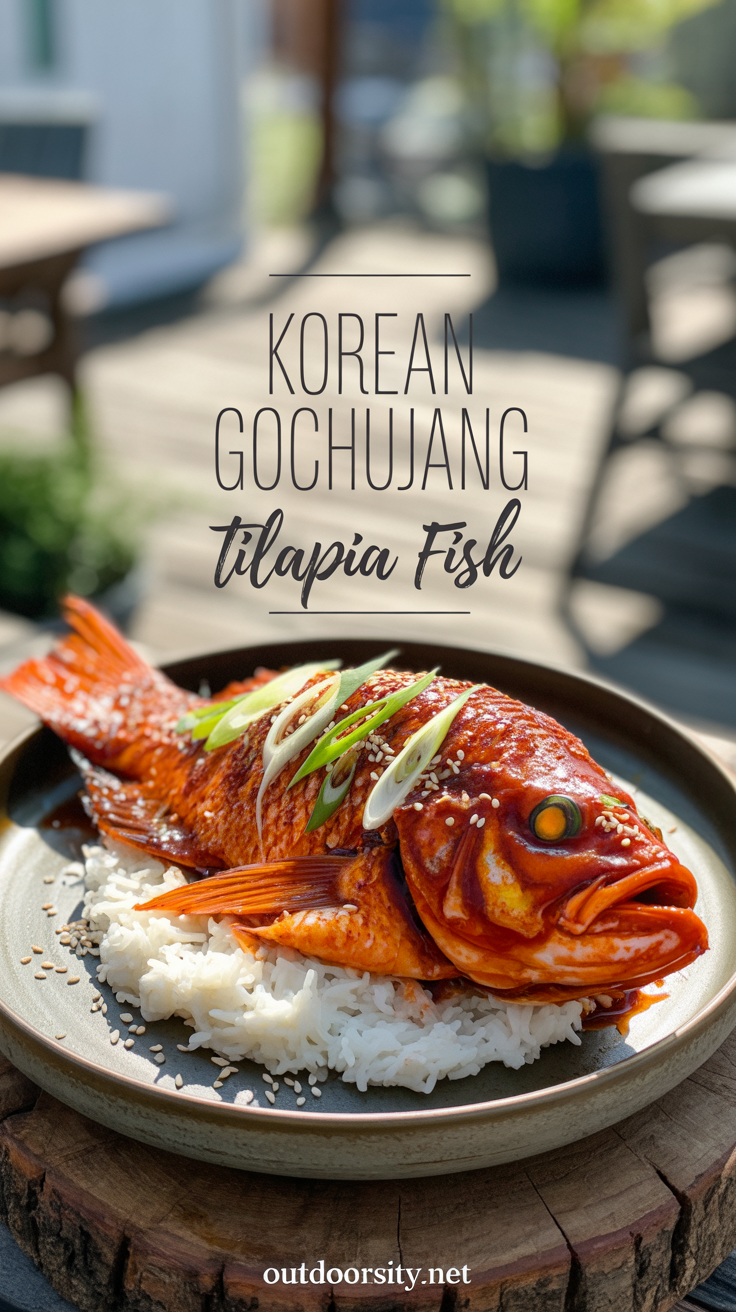
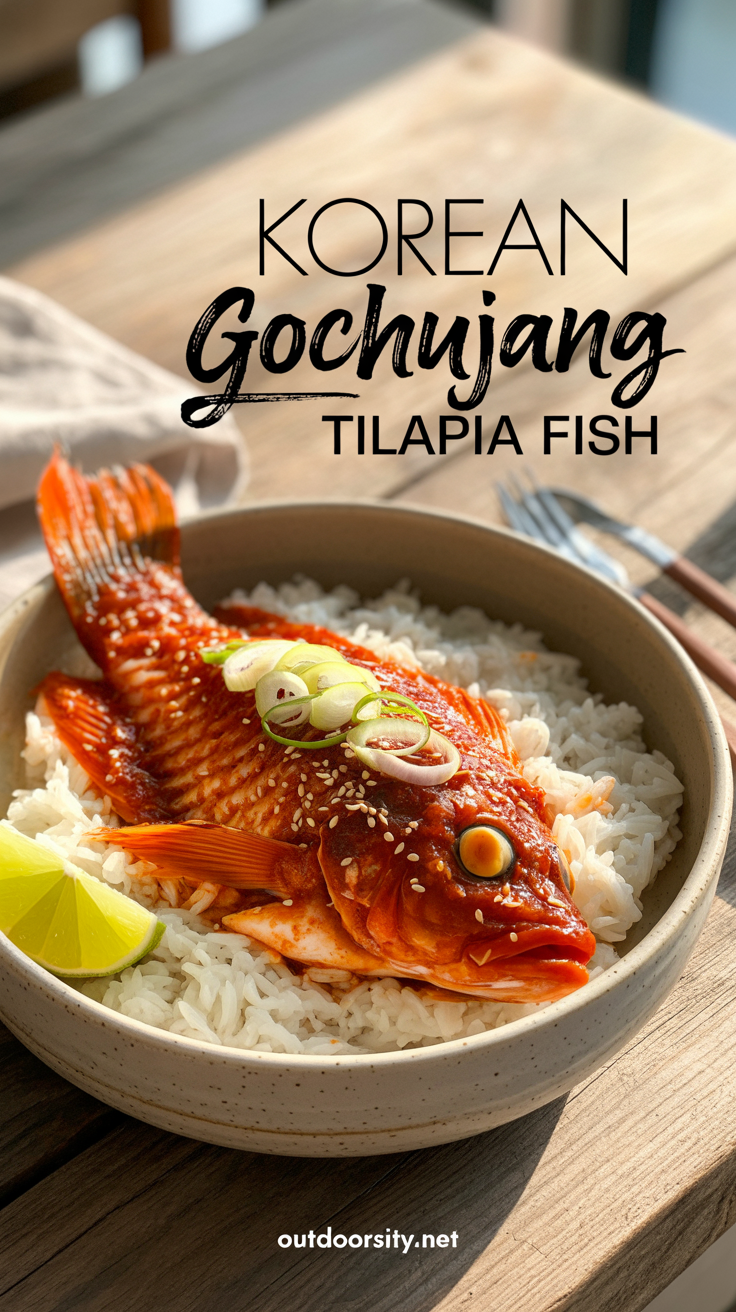
Think sweet heat, savory depth, and glossy caramel edges that look straight out of a tiny, fancy bistro. Without the tiny, fancy prices.
But here’s the catch! It’s actually easy, so you can flex your “Gourmet” status and still eat before your favorite show starts.
That’s why this saucy, sticky, oven-kissed fish is your new pescatarian bestie. One pan.
Big flavor. Zero drama.
Table of Content
Korean Gochujang Tilapia Fish Recipe – At a Glance
- Ready in: about 20–25 minutes total (including prep)
- Skill level: beginner-friendly
- Serves: 1 person (generous single serving)
- Method: oven baked on a lined sheet pan, with an optional quick broil
- Great for: fish dinners, pescatarian meals, easy gourmet date nights, and weeknight cravings
Equipment: Must-haves
- Oven (the flavor factory)
- Baking sheet (to keep the fish comfy)
- Parchment paper or foil (for easy cleanup and less scrubbing)
- Small bowl (for mixing the magic sauce)
- Whisk or spoon (to stir like you mean it)
- Measuring spoons and cup (precision beats chaos)
- Cutting board (for safe slicing)
- Sharp knife (scallion and lime won’t cut themselves)
- Paper towels (to pat the fish dry and get crispy edges)
- Spatula (to lift the fish without a meltdown)
Equipment: Nice-to-haves
- Microplane or fine grater (for whisper-thin garlic and ginger)
- Pastry brush (to paint on that glossy glaze)
- Instant-read thermometer (for perfect doneness at 145°F)
- Citrus zester (to snow confetti-like lime zest on top)
Ingredients
- 1 tilapia fillet (6–8 oz), thawed if frozen and patted dry
- 2 tbsp gochujang (Korean red chili paste; the star of our spicy rom-com)
- 1 tbsp low-sodium soy sauce (or tamari for gluten-free)
- 1 tbsp rice vinegar (bright, tangy backup singer)
- 1 tsp toasted sesame oil (nutty perfume)
- 1 tbsp honey (or brown sugar; sweet balance to the heat)
- 1 clove garlic, minced or finely grated
- 1 tsp fresh ginger, finely grated
- 1 tsp neutral oil (for greasing the pan and a light brush on the fish)
- 1 scallion, thinly sliced (green confetti)
- 1 tsp sesame seeds, lightly toasted
- 1 lime, zested and cut into wedges (zest for aroma, wedges for zing)
- 1 pinch kosher salt (just a little)
- 1 pinch black pepper (because we’re classy)
- 1 splash water, as needed to loosen the sauce (gochujang can be thicc)
Instructions
- Preheat the oven to 425°F and place a rack in the middle; you want even heat without fish gymnastics.
- Line a baking sheet with parchment or foil, then rub it with neutral oil so the fish doesn’t cling like a needy ex.
- Set the tilapia on a cutting board and pat it dry thoroughly with paper towels; dry surface equals better caramelization and happier dinner.
- In a small bowl, whisk together gochujang, soy sauce, rice vinegar, sesame oil, honey, garlic, and ginger until glossy and smooth; if it’s too thick, loosen with a tiny splash of water.
- Season the fish on both sides with salt and pepper, then move it to the lined sheet and give it a light slick of neutral oil.
- Use a pastry brush to paint a generous layer of the gochujang glaze all over the fish; think art class, but tastier.
- Bake until the fish flakes easily and is opaque in the center, about 8–10 minutes depending on thickness; an instant-read thermometer should read 145°F in the thickest part.
- For extra char and sticky edges, broil for 1 minute at the end, watching closely so the sugars don’t go from caramel to “uh-oh.”
- While the fish rests for a minute, slice the scallion with a sharp knife on your cutting board and zest the lime with a citrus zester for a fresh, aromatic hit.
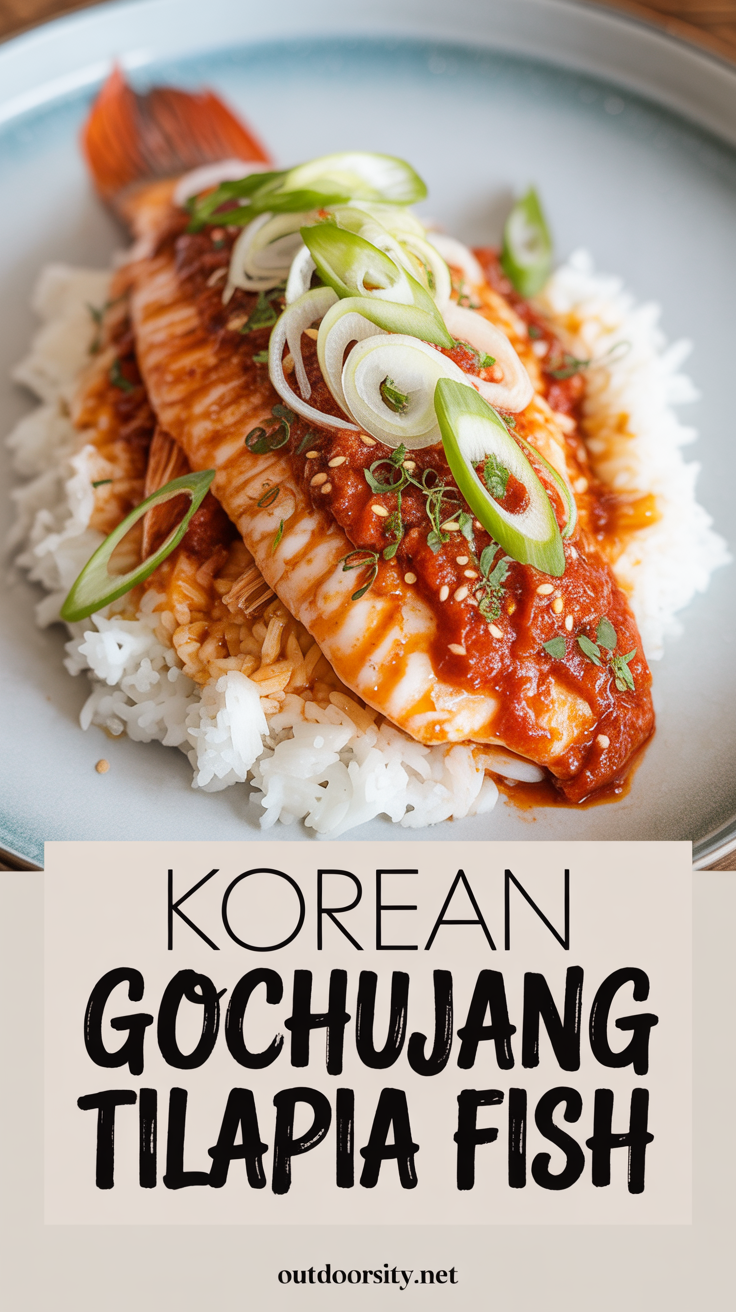
- Use a spatula to transfer the fish to a plate, shower with scallion, sesame seeds, and lime zest, then serve with a squeeze of lime for that final mic drop.
Substitutions
Need a swap so dinner still sings? Here are some smart substitutions that keep the flavor big and the stress small.
- Use cod, pollock, or haddock instead of tilapia; choose a similar thickness for the same cook time.
- Swap low-sodium soy sauce with tamari or coconut aminos for gluten-free or soy-light needs.
- Replace honey with maple syrup or brown sugar if that’s what you’ve got.
- No rice vinegar? Try apple cider vinegar or a light squeeze of lemon or lime.
- Sensitive to sesame? Use a mild olive oil instead and skip the seeds—still delicious, zero FOMO.
- If your gochujang is fiery, blend it with a spoon of ketchup or a dab of tomato paste to soften the heat without losing character.
- No oven tonight? An air fryer at 400°F for 6–8 minutes gets you that same sticky finish.
- Out of lime? Use lemon for zest and wedges; different citrus, same happy brightness.
What to Serve With It
Serve with fluffy jasmine rice or nutty brown rice to catch every drop of that sweet-heat glaze. Rice is basically the spoon you can eat.
Add a cool, crunchy side like a quick cucumber salad with rice vinegar and sesame, or some garlicky spinach wilted in a hot pan. Contrast makes the flavors pop.
A little kimchi on the side turns dinner into a spicy-sour party. Sip chilled sparkling water with lime or a light lager if you’re feeling fancy-fresh.
What Else You Should Know
If your gochujang is extra spicy, mellow it with a touch more honey or an extra squeeze of lime. You control the drama level.
For gluten-free, use tamari and check that your gochujang is certified GF. Many are, but labels love surprises.
Leftover fish keeps in the fridge for up to two days. Reheat gently in a low oven so it stays tender and doesn’t turn into a fish jerky audition.
Short on time? Mix the sauce in the morning and store it covered.
Brushing it on later makes dinner feel instant, like a tasty cheat code.
