
Craving something fast, flaky, and actually good for you? Salmon to the rescue — and no, it won’t judge your life choices.
This simple baked salmon is the answer when you want a healthy dinner without a lot of fuss. Healthy and satisfying, with a tiny bit of glamour from lemon and herbs.
But here’s the catch! You don’t need fancy skills or an army of pots.
Just one fillet, a few pantry heroes, and your oven will do the heavy lifting.
Table of Content
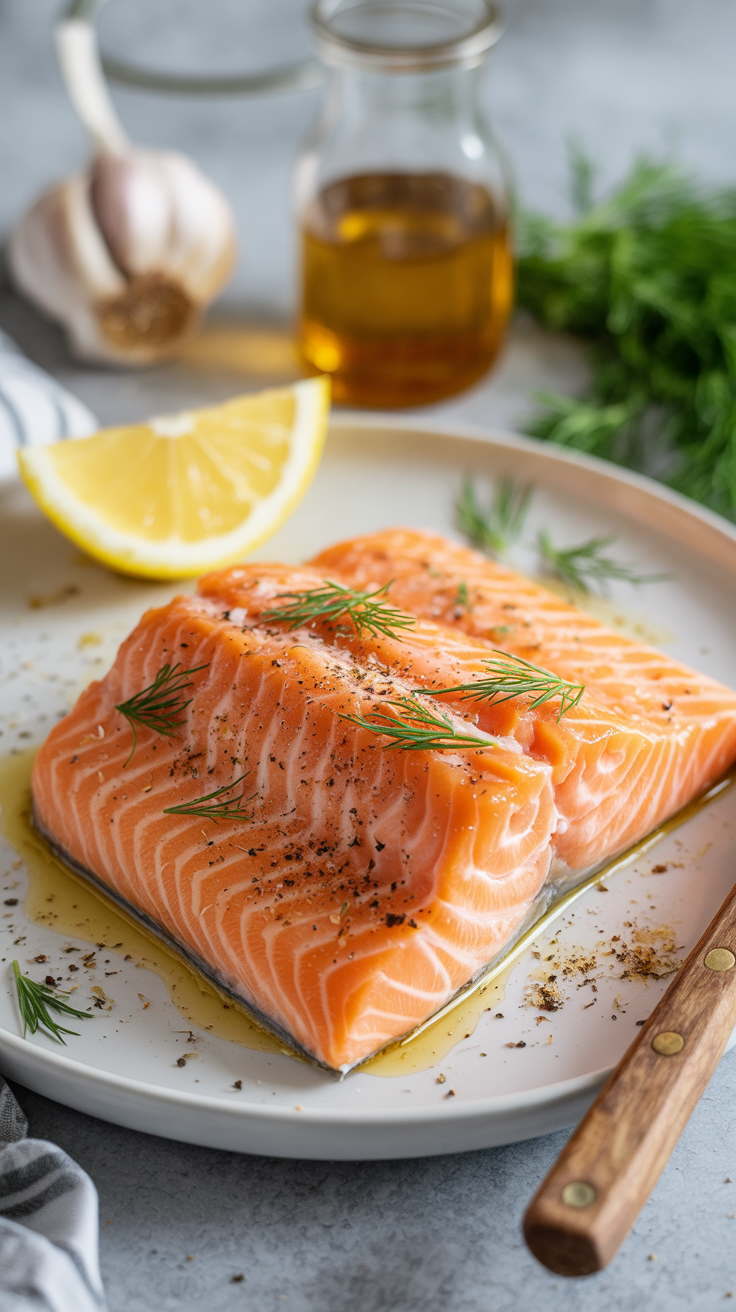
Equipment: Must-haves
- Oven (for reliable heat; preheat like a boss)
- Baking sheet (preferably rimmed)
- Parchment paper (or foil, to avoid cleanup grief)
- Meat thermometer (for no-guesswork doneness)
- Sharp knife (for scoring or trimming the fillet)
Equipment: Nice-to-haves
- Wire rack (to keep the fillet airy and crispy underneath — optional but nice)
- Fish spatula (for gentle lifting and serving)
- Citrus zester (for prettier lemon zest, not strictly required)
Ingredients
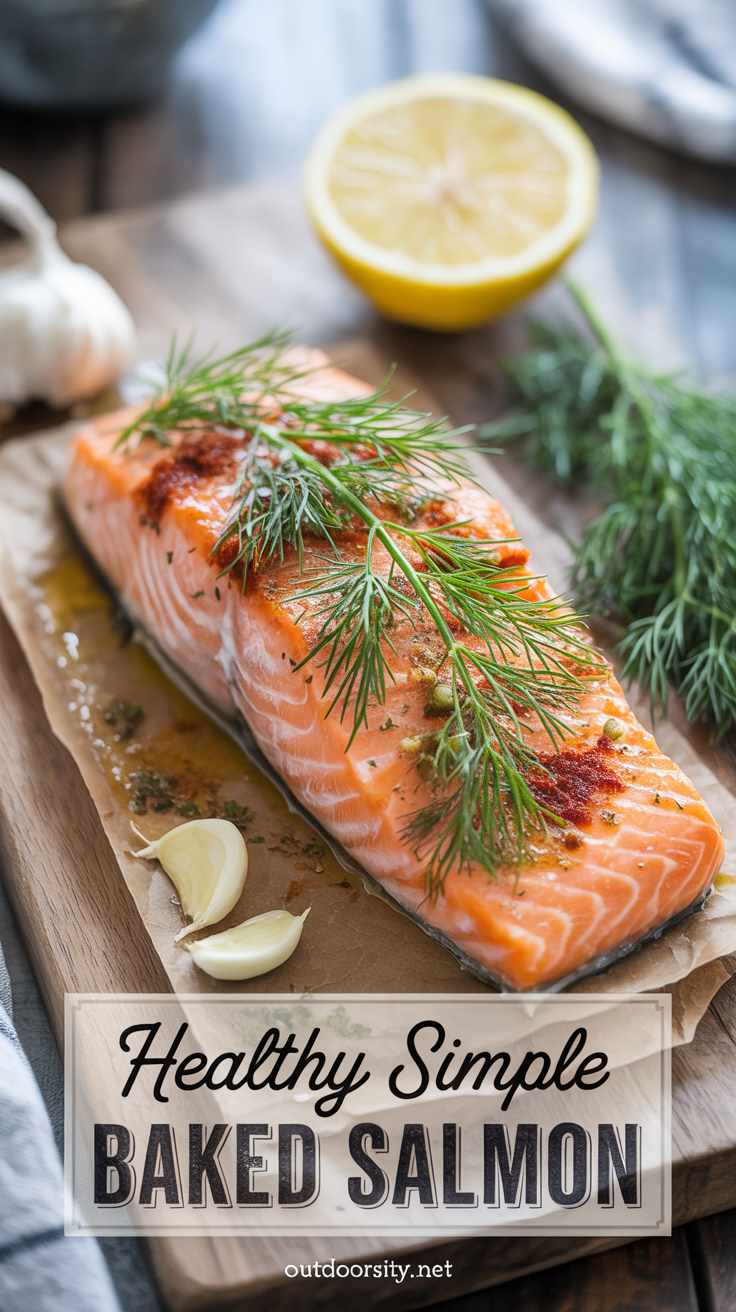
- 1 (6–8 oz) salmon fillet, skin-on or skinless depending on mood
- 1 tbsp olive oil — keeps the skin happy and the fish glossy
- 1 lemon, zested and halved (zest for brightness, half for juice)
- 1 garlic clove, minced — the tiny hero of flavor
- 1 tsp honey or maple syrup — yes, a little sweet helps the caramel
- 1/2 tsp dried dill — or a sprig of fresh if you’re feeling fancy
- 1/4 tsp smoked paprika — gentle smokiness, not campfire drama
- 1/4 tsp salt — simple, honest seasoning
- 1/8 tsp black pepper — freshly ground if possible
- 1 sprig parsley, chopped for garnish and the illusion of adulthood
- 1 lemon wedge for serving — because presentation matters
Instructions
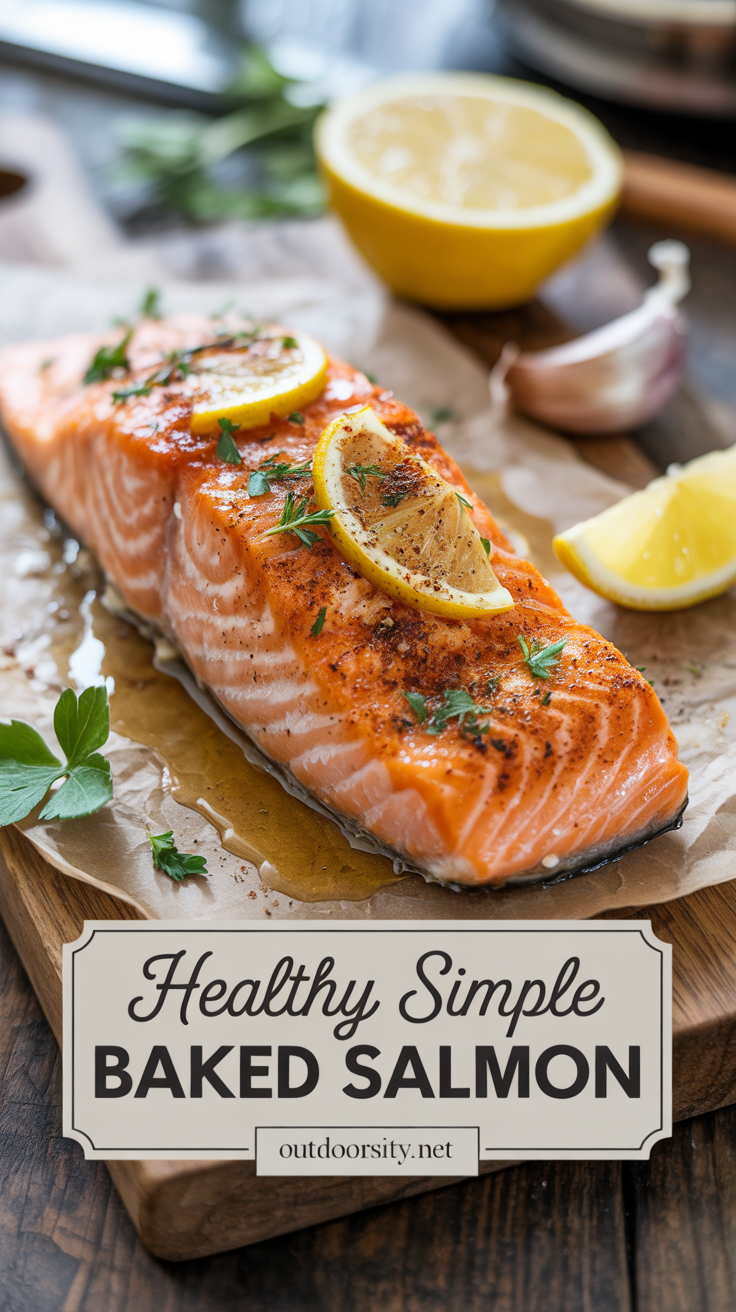
- Preheat the oven to 400°F so it’s ready when you are; that’s the sweet spot for tender, flakey flesh and a little golden finish.
- Line the baking sheet with parchment paper to avoid scrubbing and to keep your life simple.
- Pat the salmon fillet dry with a paper towel like you’re giving it a tiny spa moment; dry skin = crisp skin if skin is present.
- Place the fillet skin-side down on the prepared baking sheet and score the skin lightly if the fillet is thick, which helps heat penetrate evenly.
- In a small bowl, mix olive oil, minced garlic, honey, lemon zest, dried dill, smoked paprika, salt, and black pepper until a glossy paste forms; smear this all over the top of the fillet with your fingers or a spoon.
- If you have a wire rack, set it on the baking sheet and place the fillet on the rack to allow air to circulate under the fish for crisper texture; otherwise, lay the fillet directly on the parchment.
- Slide the baking sheet into the oven and bake the fillet until the surface looks opaque and the flesh flakes easily when prodded with a fork; this usually takes about 12–15 minutes depending on thickness.
- Check doneness with a meat thermometer by inserting it into the thickest part of the fillet; aim for an internal temperature of 125–130°F for medium-rare, or 140°F if you prefer fully cooked fish.
- If you like a little extra color on top, switch the oven to broil for the last 1–2 minutes while watching closely so nothing becomes charcoal art.
- Remove the baking sheet from the oven and let the fillet rest for a couple of minutes; resting helps the juices redistribute and keeps the fish reproach-free.
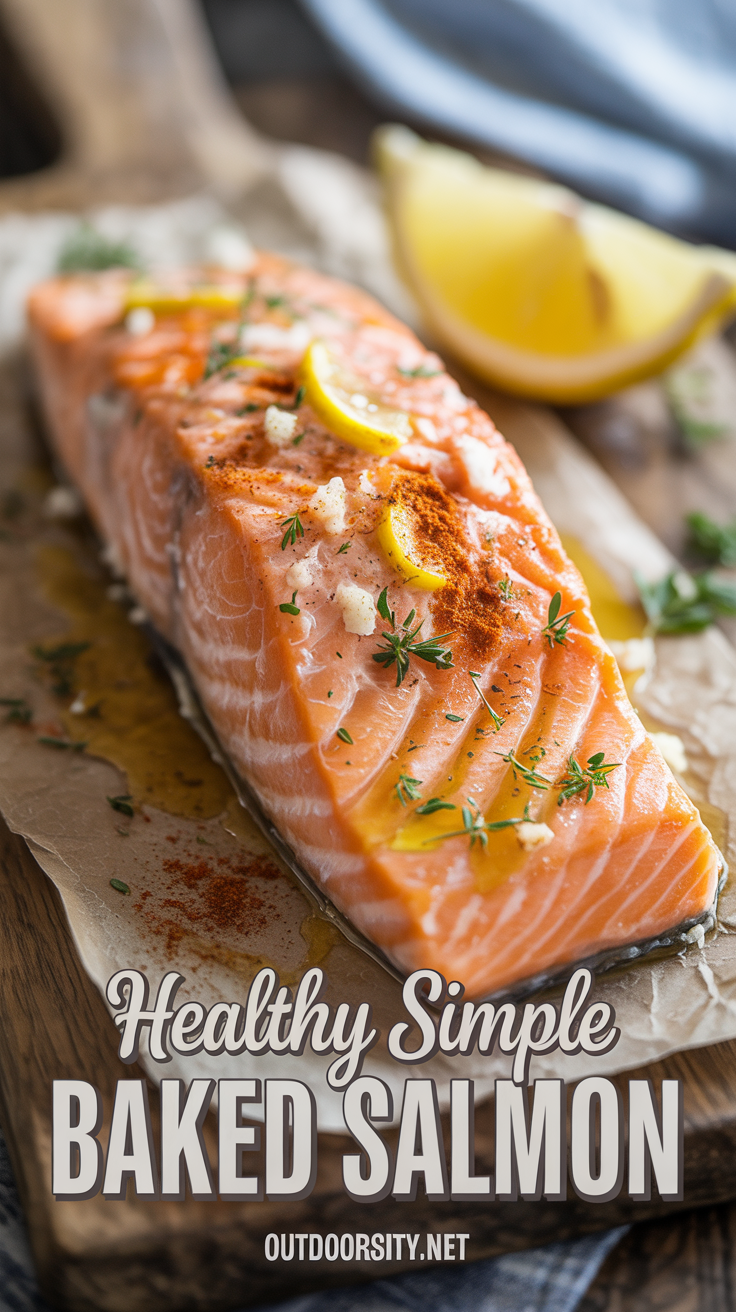
- Squeeze the remaining lemon half over the fillet, sprinkle chopped sprig parsley on top, and transfer the fillet to a plate with a fish spatula or wide spatula.
- Serve with the lemon wedge alongside and a cheeky final grind of black pepper if you’re feeling dramatic.
What Else You Should Know
Tip: Thicker fillet needs a couple more minutes; thin fillet needs less. Trust the thermometer, not your instincts alone.
Variation: Swap dried dill for fresh basil or a pinch of cumin for a different flavor mood. Honey can be skipped for a strictly savory profile.
Serving suggestion: Pair the fillet with steamed vegetable or a simple salad and a grain like quinoa or brown rice for a balanced plate. Make-ahead and storage: Cooked fillet will keep in an airtight container in the fridge for up to two days.
Reheat gently in the oven at low heat or enjoy cold on a salad. Nutrition note: Salmon is rich in omega-3 fatty acid which supports heart and brain health.
This recipe keeps the fish lean and flavorful without drowning it in sauce. Final pep talk: You just made a restaurant-worthy fillet with minimal fuss.
That’s why quick fish nights are the culinary equivalent of a mic drop.
