
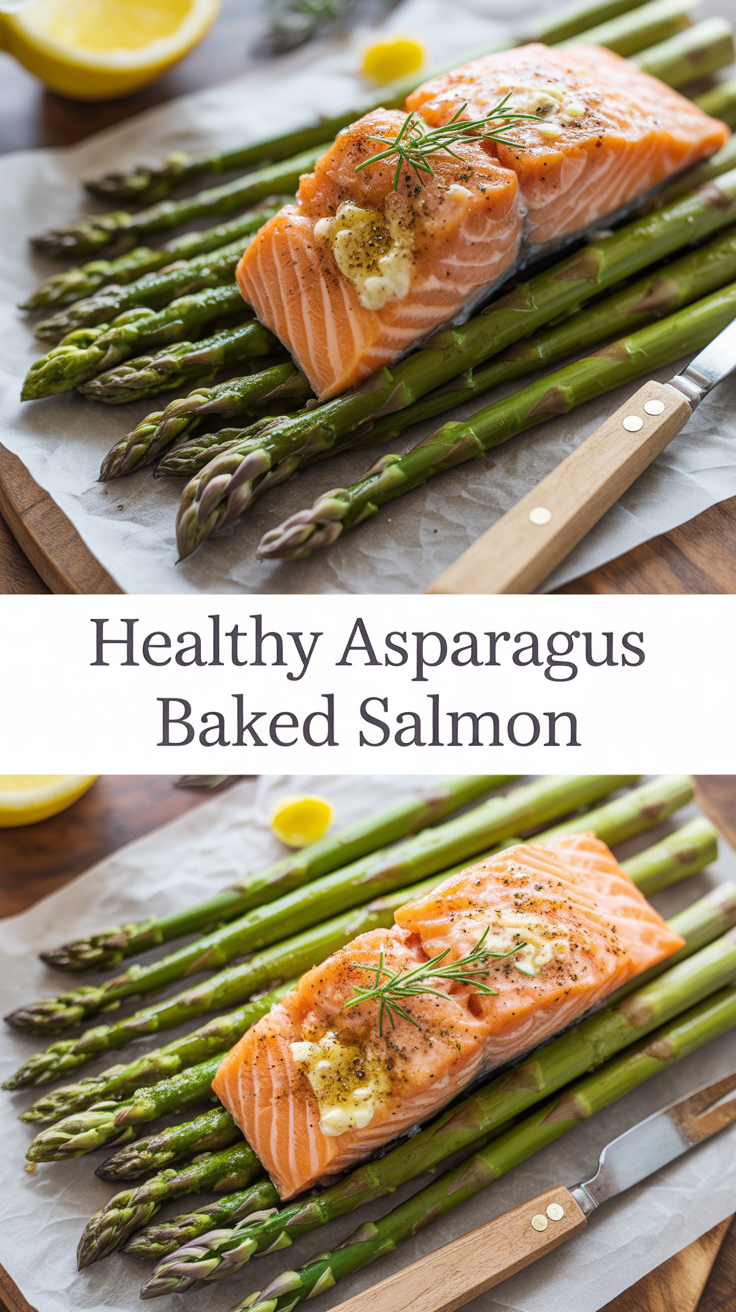
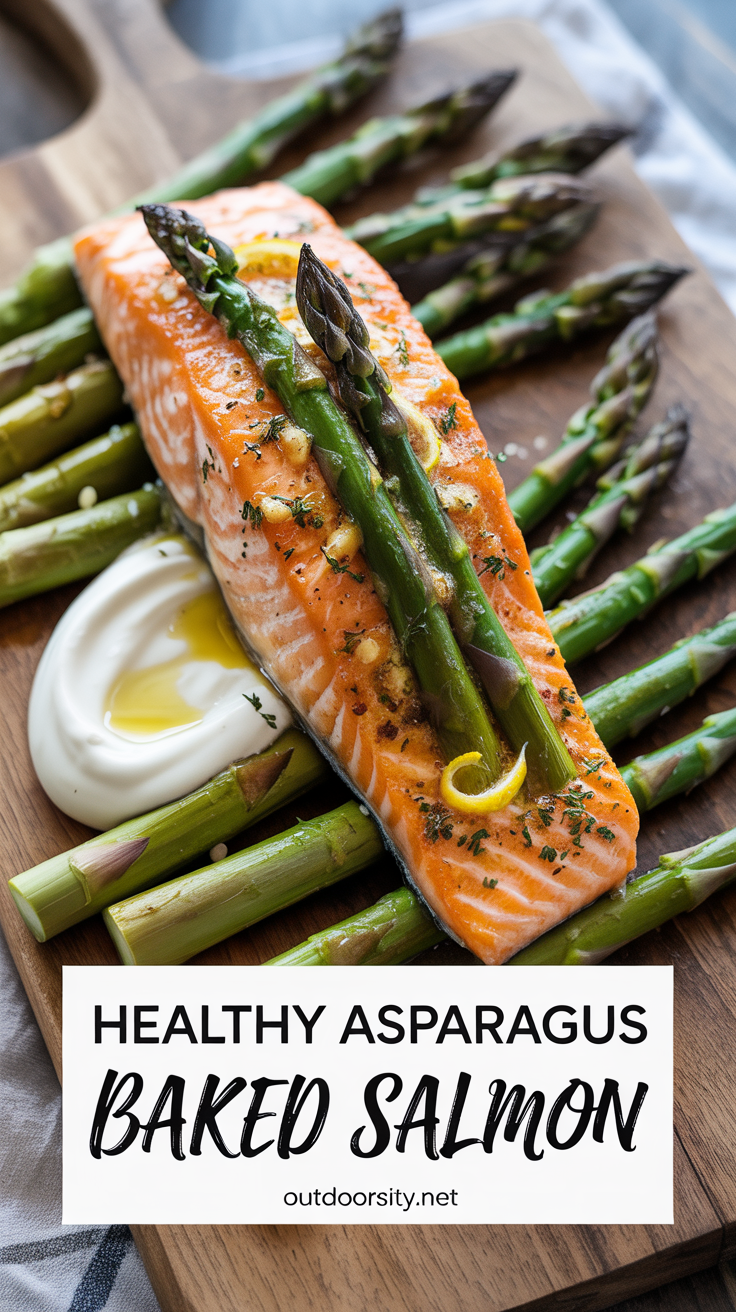
Craving a weeknight dinner that feels fancy but doesn’t require a culinary degree? This healthy baked salmon with asparagus is the cozy, fast answer.
It cooks in one pan, keeps your oven time short, and smells like you definitely planned dinner. But here’s the catch! It’s also genuinely good for you — so you can brag and be virtuous at the same time.
Table of Content
Equipment: Must-haves
- Baking sheet
- Parchment paper
- Mixing bowl
- Sharp knife
- Cutting board
- Measuring spoon
- Tongs
- Meat thermometer
- Oven
Equipment: Nice-to-haves
- Wire rack (optional)
- Fish spatula (optional)
- Citrus zester (optional)
- Silicone brush (optional)
Ingredients
- 1 (6–8 oz) salmon fillet, skin-on or skinless as you prefer
- 1 bunch asparagus, ends trimmed
- 2 tablespoon olive oil
- 1 clove garlic, minced
- 1 teaspoon Dijon mustard
- 1 teaspoon honey or maple syrup
- 1 teaspoon smoked paprika
- 1 teaspoon lemon zest
- 1 lemon, juiced
- 1 teaspoon sea salt
- 1/2 teaspoon black pepper
- 1 tablespoon fresh dill, chopped (or parsley if you prefer)
- 1/4 cup plain Greek yogurt (optional, for sauce)
Instructions
- Preheat the oven to 400F and line the baking sheet with parchment paper.
- If you have a wire rack, set it on the baking sheet and place the salmon on the rack; this lifts the fish for more even air flow — otherwise lay the salmon directly on the parchment.
- Lay the asparagus in a single layer beside the salmon so everything roasts together, leaving a little space so steam can escape.
- In a mixing bowl, whisk the olive oil, minced garlic, Dijon, honey, smoked paprika, lemon zest, lemon juice, salt, and pepper until glossy and combined — this is your punchy glaze.
- Toss the asparagus with a little of the glaze using tongs so each spear looks shiny and not sad.
- Brush or spoon the remaining glaze over the top of the salmon using a silicone brush or the back of a spoon so the surface is well coated.
- Place the baking sheet in the oven and roast at 400F until the salmon is cooked through and the asparagus is tender-crisp, generally about 12–15 minutes depending on thickness; keep an eye so the asparagus doesn’t become limp.
- Check doneness with your meat thermometer inserted into the thickest part of the salmon — aim for 125–130F for medium-rare or 145F for fully cooked according to safety guidelines.
- Remove the sheet from the oven and let the salmon rest a few minutes so juices settle; this is a good moment to resist immediate fork-based sabotage.
- If using, whisk the Greek yogurt with a splash of lemon juice, some chopped dill, salt, and pepper to make a quick cooling sauce; spoon a little over the salmon or serve on the side.
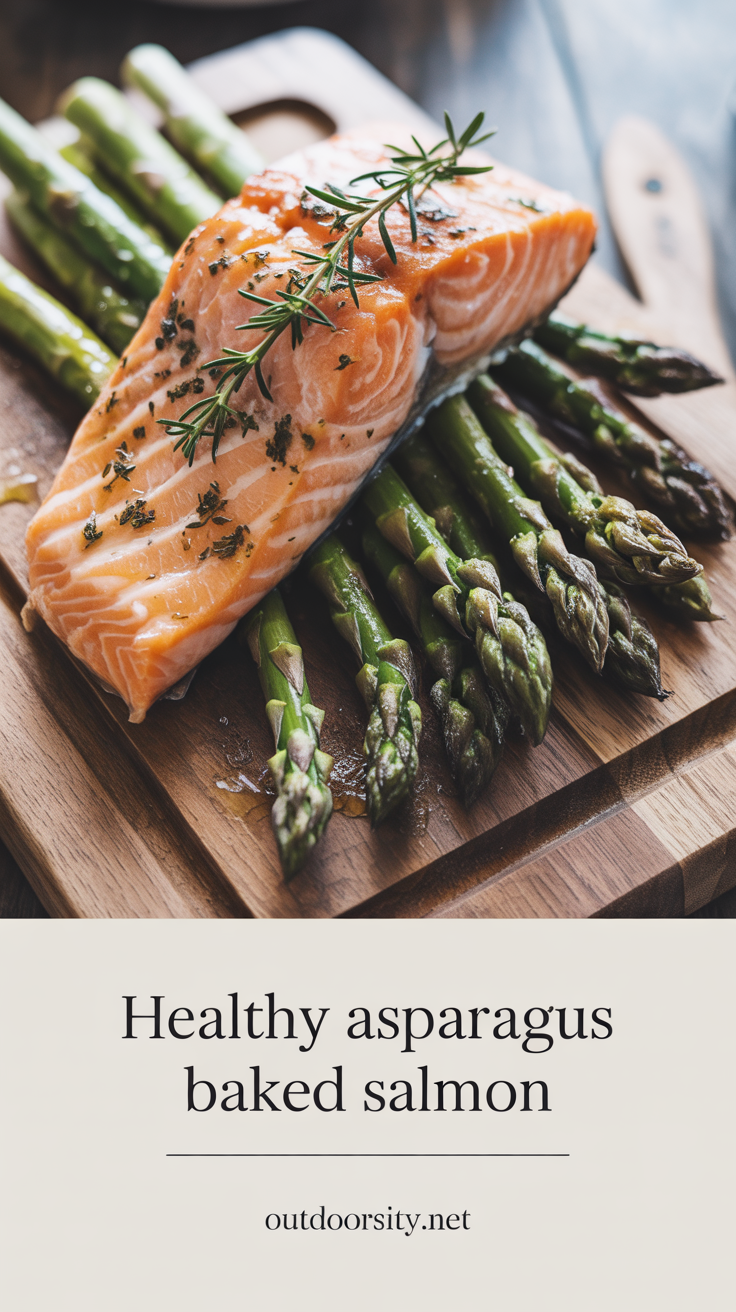
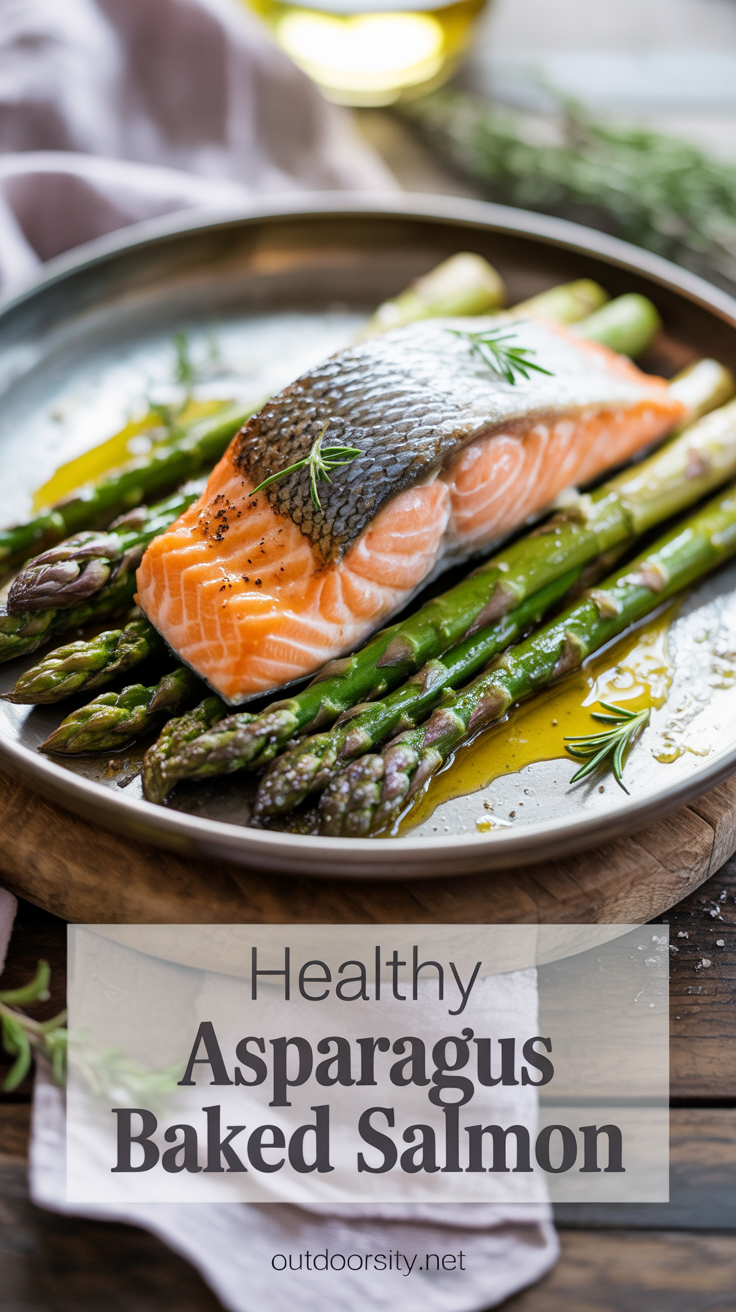
- Use a fish spatula or spatula to transfer the salmon to a plate, top with chopped fresh dill, and finish with an extra squeeze of lemon — that bright hit makes everything sing.
What Else You Should Know
Tips: Pat the salmon dry before glazing so the glaze sticks and the surface roasts instead of steams. Timing note: If your salmon is extra thick, add a few minutes and rely on the meat thermometer rather than a clock.
That’s why a thermometer is a must-have. Variations: Swap smoked paprika for cayenne for heat, or add a pop of orange zest instead of lemon for a sweeter citrus note.
Serving suggestion: Plate the salmon and asparagus with a scoop of brown rice or a simple green salad to keep the meal balanced and healthy. Make-ahead: Mix the glaze in advance and store it in the fridge; brush it on at the last minute so flavors feel fresh.
Leftovers reheat gently in a low oven or eat cold flaked over a salad for a glorious lunch. Quick storage: Refrigerate any leftover fish within two hours and eat within two days.
Freezing is possible, but fresh is always better. Final note: But here’s the catch! Keep things simple and use fresh lemon and herbs — small details make a healthy dish taste like it took more effort than it did, and that, my friend, is the culinary flex.
