
Craving a light, sunshiney dinner that doesn’t hijack your evening? Meet oven-baked crappie dressed in Mediterranean charm and ready before your playlist hits track five.
It’s simple, fast, and wildly flavorful. Think zesty lemon, garlic, and briny little buddies doing a happy dance.
But here’s the catch! You only need one pan and a teeny bit of effort, which is great because your sink needs a day off.
That’s why this easy, pescatarian-friendly meal is basically a weeknight superhero wearing a cape made of olive branches.
Table of Content
Easy Mediterranean Oven-Baked Crappie Recipe – At a Glance
- Ready in: about 20–25 minutes total, including quick prep
- Skill level: beginner-friendly
- Serves: 1 person (double or triple as needed)
- Method: oven-baked on a lined sheet pan
- Great for: quick weeknight dinners, pescatarian meals, and light Mediterranean plates
Equipment: Must-haves
- Baking sheet or small oven-safe baking dish
- Parchment paper to line the pan
- Paper towels for patting fish dry
- Cutting board for lemon and herbs
- Sharp knife for slicing and mincing
- Small mixing bowl for the marinade
- Measuring spoons so flavors don’t play hide-and-seek
- Spoon for mixing and spreading

Equipment: Nice-to-haves
- Microplane zester for fluffy lemon zest
- Citrus juicer to squeeze every drop
- Pastry brush for even oiling
- Fish spatula for gentle lifting
- Instant-read thermometer to check 145°F doneness
- Aluminum foil for tenting while resting
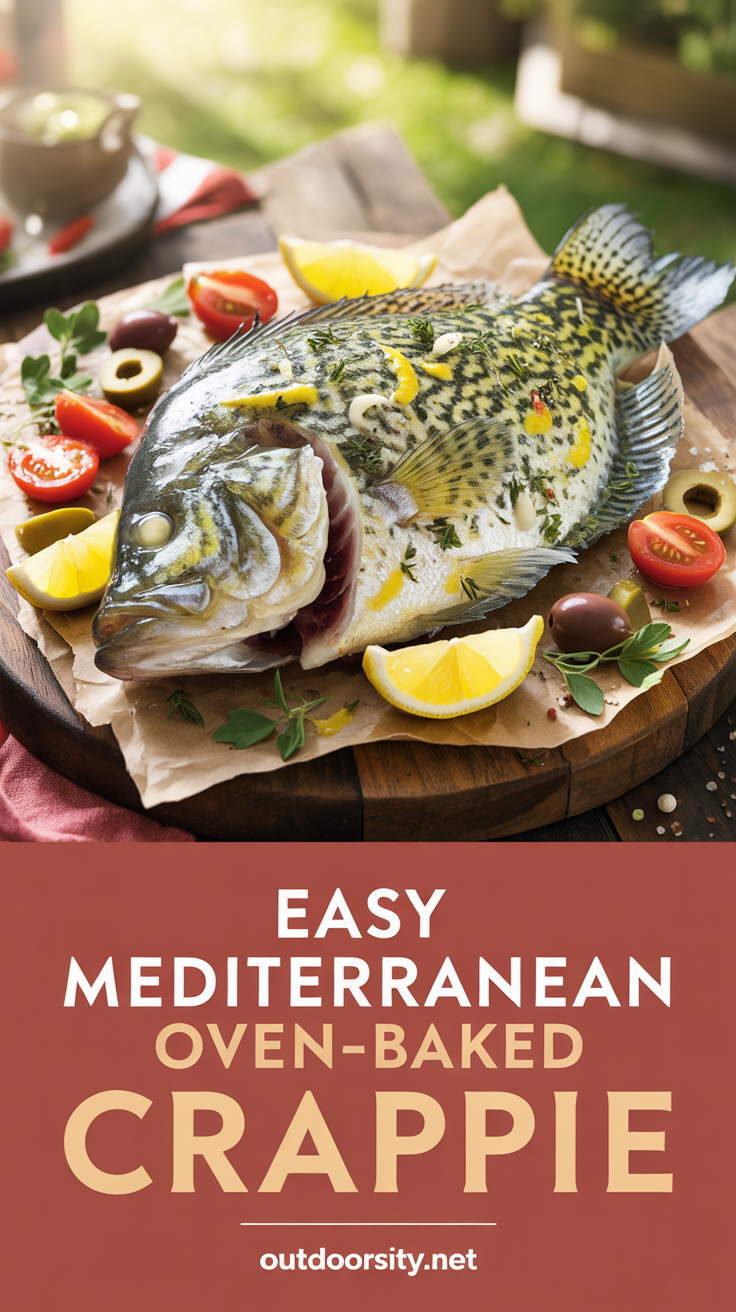
Ingredients
- 1 crappie fillet (about 6–8 oz), skin-on or skinless, patted dry
- 1 tbsp extra-virgin olive oil, the good mood maker
- 1 lemon, zest and juice, the bright VIP
- 1 small garlic clove, finely minced, the flavor whisperer
- 1/2 tsp dried oregano, classic Mediterranean vibes
- 1/4 tsp smoked paprika, optional but oh-so-sunny
- 1/8 tsp kosher salt, adjust to taste after baking
- 1/8 tsp black pepper, freshly ground if possible
- 6 cherry tomatoes, halved, tiny pops of sweetness
- 6 pitted Kalamata olives, halved, for briny balance
- 1 tsp capers, rinsed, tiny but mighty
- 1 tbsp fresh parsley, chopped, for a green confetti finish
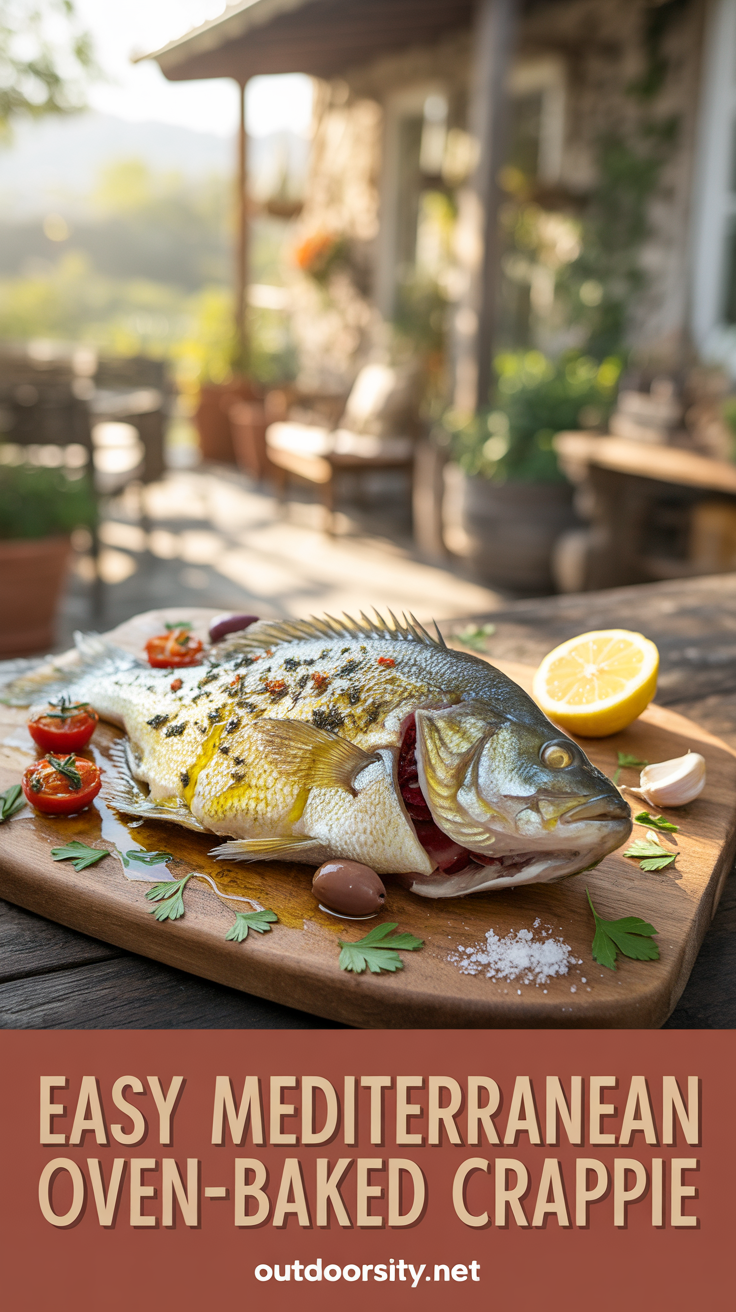
Instructions
- Preheat the oven to 425°F and line a baking sheet with parchment so cleanup is faster than your last text reply.
- Place the cutting board on the counter and slice the lemon in half with a sharp knife; zest it with a microplane if you have one, then squeeze the juice using a citrus juicer if that’s your style.
- Pat the crappie completely dry with paper towels until it feels like a beach towel on a sunny day; this helps the surface get lightly crisp.
- In a small bowl, stir together olive oil, lemon zest, lemon juice, minced garlic, oregano, smoked paprika, a pinch of salt, and pepper until glossy and inviting.
- Lay the crappie on the prepared pan, skin-side down if it has skin, and spoon the marinade over the top so the fish gets a spa treatment.
- Use a pastry brush if you’ve got one to nudge the marinade into every corner like you mean it.
- Scatter cherry tomato halves, olive halves, and capers around the fish so they roast and mingle into a built-in sidekick.
- Slide the pan into the oven and bake at 425°F for 10–12 minutes, depending on thickness; thinner pieces may be done sooner, so start peeking at 9.
- Check for doneness by nudging a corner with a fork; the fish should be opaque and flake easily, or register about 145°F on an instant-read thermometer.
- If the top needs a tiny kiss of color, switch to broil for 1 minute, watching closely like it owes you money to avoid over-browning.
- Remove the pan and rest the fish for 2 minutes; tent loosely with foil if your kitchen has a draft and you like it extra cozy.
- Slide a fish spatula under the fillet and transfer to a plate, then spoon the roasted tomato-olive-caper goodness over the top like a Mediterranean confetti toss.
- Finish with fresh parsley and a squeeze of lemon for that last bright pop, then serve immediately while the edges are still a little crisp and the center is tender.
Substitutions
Need a swap because the store was out or your kitchen is keeping secrets? Here are some easy substitutions that keep the Mediterranean vibe intact.
- Swap crappie with tilapia, perch, or cod for a similarly mild, flaky result.
- Use Italian seasoning if oregano is playing hide-and-seek.
- Trade smoked paprika for sweet paprika or a pinch of red pepper flakes if you like a gentle kick.
- Choose lime when life forgets to give you lemons; it’s zesty and bright too.
- Pick green olives if Kalamata isn’t your jam; just keep them pitted.
- If skipping capers, add one more olive for brininess or a dash of vinegar for tang.
- Go garlic-free by using a little minced shallot; it’s gentle and sweet.
- For a different herb finish, try fresh dill or basil instead of parsley.
- Use avocado oil if you’re low on olive oil; keep the same method.
- Make it dairy-free and gluten-free as written; nothing to change here unless your side dish brings gluten.
What to Serve With It
Pair with lemony couscous or orzo for a fast, fluffy carb that soaks up the citrusy pan juices like a pro. Add a sprinkle of parsley to keep the green theme going.
Go fresh with a crisp Greek-style salad of cucumber, tomato, and red onion. A crumble of feta is lovely if you’re dairy-friendly.
Roasted vegetables are always a win. Think zucchini, peppers, or asparagus tossed with olive oil and a pinch of oregano for the full Mediterranean hug.
For sips, a chilled Sauvignon Blanc, a lemony sparkling water, or mint tea keeps things breezy and bright.
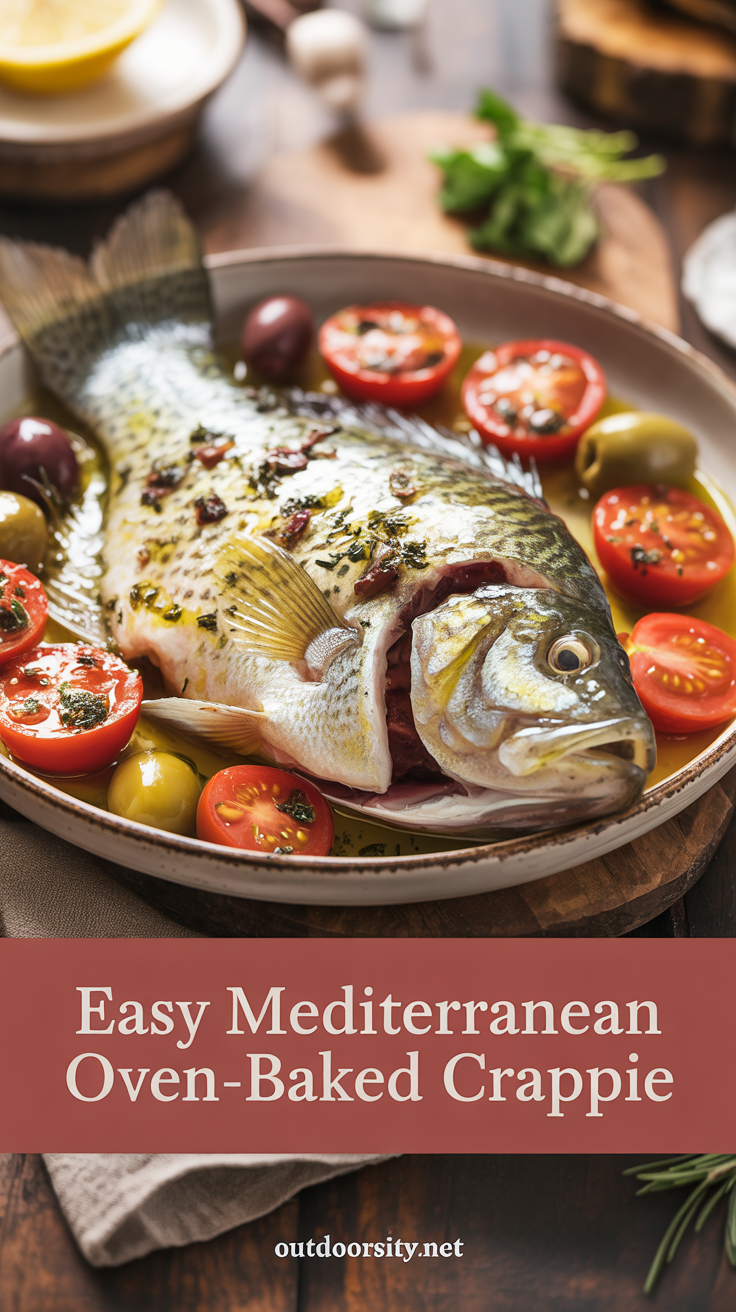
What Else You Should Know
For an easy weeknight groove, prep the marinade earlier in the day and keep it covered in the fridge. Add it to the fish right before baking so the delicate flesh doesn’t over-marinate and go mushy.
If you’re watching sodium, rinse those olives and capers under cold water. That quick shower cuts salinity while keeping the savory magic.
Crappie is delightfully lean, so the olive oil keeps it juicy. If your fillet is very thin, start checking early; fish is done the moment it flakes with gentle pressure.
Cooking for more than one? Line up fillets on the same sheet, leaving space between each.
But here’s the catch! Keep them in a single layer for even heat and golden edges.
