
Craving something quick, healthy, and fancy enough to impress but lazy enough for weeknight vibes? Easy classic baked salmon to the rescue.
This classic recipe solves the eternal problem of making fish that is not rubbery or needy.
Simple steps. Big flavor.
No fancy equipment.
No mysterious sauces. Just a fillet, a few pantry heroes, and an oven that does the heavy lifting.
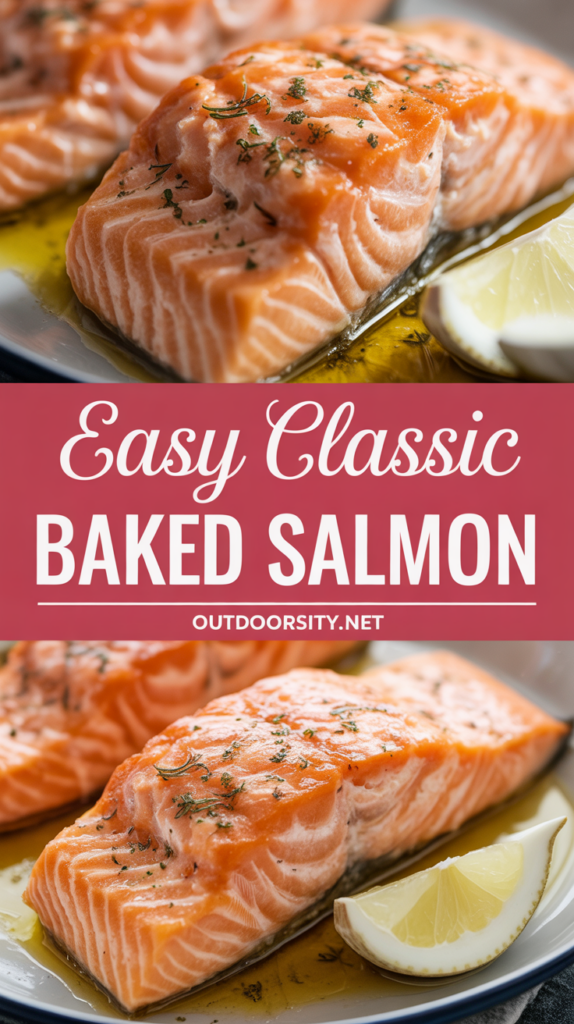
It’s ideal for busy weeknights, but elegant enough for guests when you pair it with a salad, rice, or roasted veggies.
Whether you’re new to cooking salmon or just want a reliable go‑to recipe, this easy oven baked salmon will quickly become a staple in your dinner rotation.
Table of Content
Easy Classic Baked Salmon – At a Glance
- Ready in: about 20–25 minutes total (including prep)
- Skill level: beginner‑friendly
- Serves: 2–4 people (depending on appetite and side dishes)
- Method: oven baked on a sheet pan or in a baking dish
- Great for: quick weeknight dinners, meal prep, or a simple “wow” main course
Baked salmon is one of the easiest ways to get a healthy, protein‑rich dinner on the table fast.

Scroll down for required equipment, the full ingredient list, step‑by‑step instructions, and tips to tell when your salmon is perfectly cooked.
Equipment: Must-haves
- Baking sheet
- Parchment paper
- Oven
- Sharp knife
- Cutting board
- Small bowl
Equipment: Nice-to-haves
- Meat thermometer
- Fish spatula
- Kitchen tongs
- Microplane zester

Ingredients
- 1 salmon fillet (about 6 oz), skin on if possible
- 1 tablespoon olive oil
- 1 clove garlic, minced
- 1 lemon (you will zest and juice it)
- 1 teaspoon salt
- 1/4 teaspoon black pepper
- 1 sprig fresh dill (or 1 teaspoon dried dill if you’re doing pantry hero mode)
- 1 teaspoon maple syrup or honey (optional, for a tiny glaze)
Instructions
- Preheat the oven to 400°F (200°C).
- Line the baking sheet with parchment paper so cleanup feels like cheating.
- Pat the salmon fillet dry on the cutting board with a paper towel; dry skin = crisp skin, and crispy is the universal goal.
- Place the fillet skin-side down on the lined baking sheet and set it aside like it’s the guest of honor.
- In the small bowl, combine olive oil, minced garlic, the zest and a squeeze of the lemon, salt, and black pepper, then stir until it looks and smells like vacation.
- If you like a hint of sweet, stir the maple syrup or honey into the oil mixture; that’s the optional cliffhanger nobody ever regrets.
- Brush or drizzle the mixture evenly over the top of the salmon. If you have a microplane zester, give a light extra zest over the top for brightness.
- Sprinkle the fresh dill over the fillet. It makes everything look intentional and slightly fancy.
- Slide the baking sheet into the hot oven and bake until the fish is just cooked through; this usually takes about 10 to 14 minutes depending on thickness.
- Check doneness by gently pressing the top of the fillet—if it flakes easily with a fork it’s done. Or use a meat thermometer and aim for 125–130°F for medium, or 145°F if you want it fully set according to USDA guidance.
- Remove the salmon from the oven and let it rest for a couple of minutes so the juices settle and you don’t burn your mouth like a rookie.
- Finish with a fresh squeeze of lemon and a final scatter of dill. Use a fish spatula or kitchen tongs to serve gently so the fillet keeps its dignity.
- Plate with a lemon wedge and whatever sides you like, then pretend you planned this all weekend. Bonus: take a photo for proof.

Ingredient Substitutions
- Salmon: Use trout or arctic char if you can’t find salmon; both bake in almost the same time and have a similar rich texture.
- Olive oil: Swap in melted butter, ghee, avocado oil, or a neutral vegetable oil if that’s what you have on hand.
- Fresh garlic: Use 1/4–1/2 teaspoon garlic powder instead, or skip it and add extra lemon zest and dill if you’re sensitive to garlic.
- Lemon: Try lime or orange in the same amount for a different citrus profile, or use 2–3 tablespoons bottled lemon juice if you’re out of fresh.
- Fresh dill: Replace with fresh parsley, chives, thyme, or 1 teaspoon dried Italian seasoning if dill isn’t your thing.
What Else You Should Know
Tips: Use skin-on salmon for the easiest crisp. If you hate crispy skin, remove it before baking and don’t tell anyone.
Timing: Thicker fillet? Add a few minutes.
Thin fillet? Check early.
Overcooked salmon is sad salmon.
Doneness: For restaurant-like texture, aim for 125–130°F internal temp; for textbook-safe, aim for 145°F.
Both are acceptable, but your preference matters.
Variations: Swap dill for a sprig of parsley or a sprinkle of smoked paprika.
Want Asian vibes? Swap the oil mix for soy sauce, grated ginger, and sesame oil.
Serving suggestions: Serve with steamed rice, a simple green salad, roasted vegetable, or buttery new potato. Lemon wedge is non-negotiable.
Storage: Cool, wrap tightly, and refrigerate for up to two days. Reheat gently in a low oven so the salmon stays tender.
Why this works: High heat for a short time locks in moisture while the topping adds flavor without fuss. That’s how you get a dish that feels special with minimal drama.
Final note: If the oven and you have a meeting scheduled in 12 minutes, this is the one to book. Simple, fast, and delicious—like a good friend who brings dessert.
