
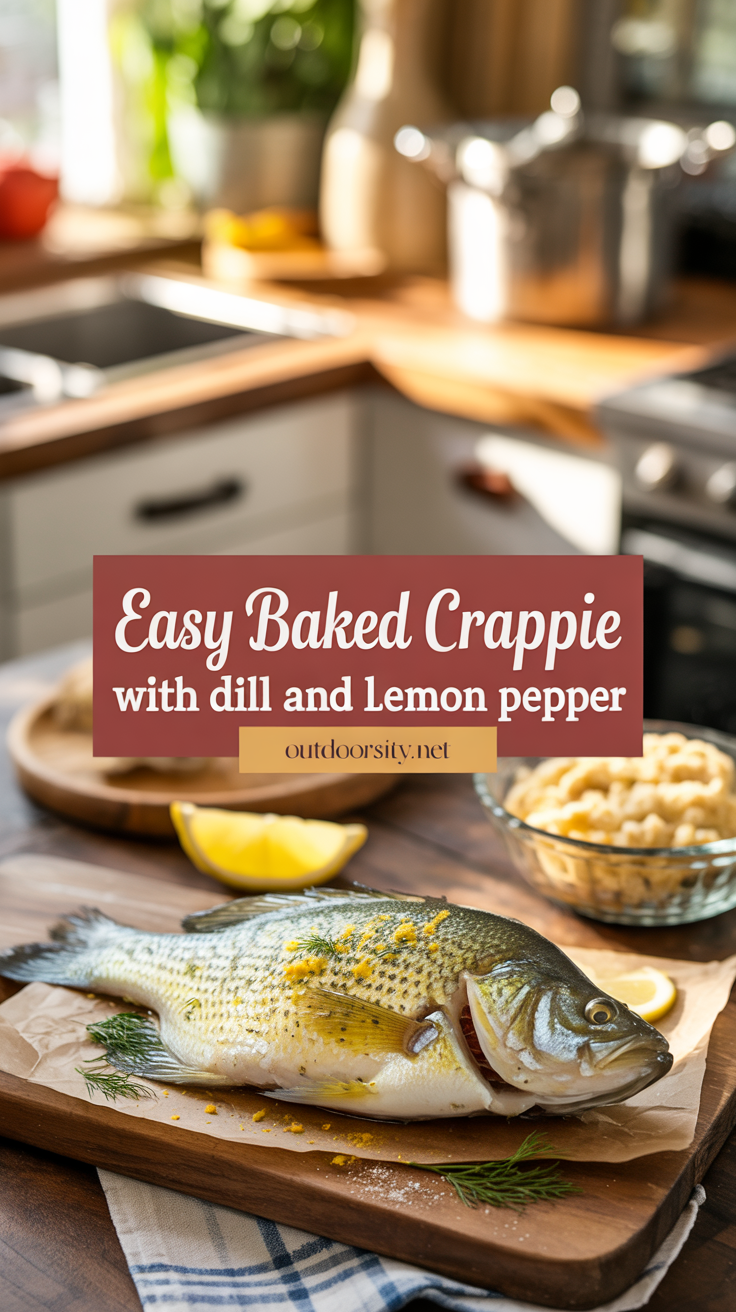
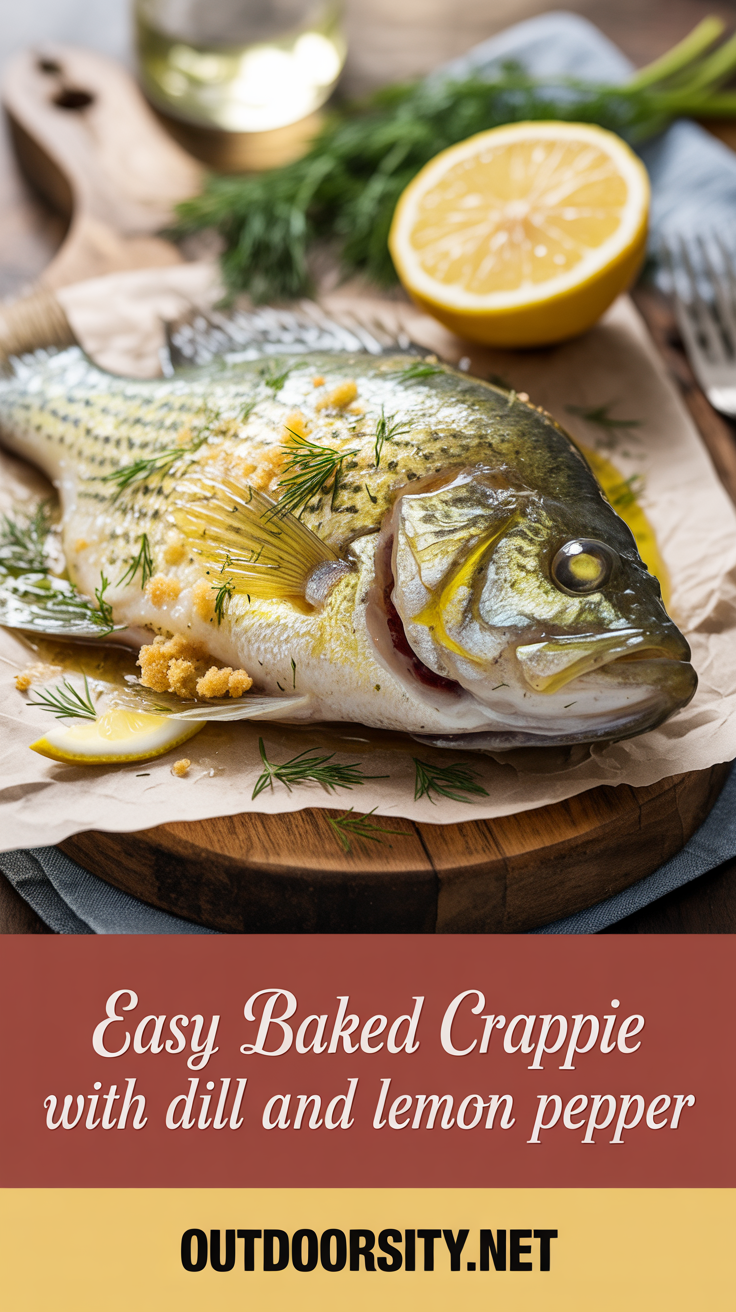
Craving an easy weeknight win that doesn’t leave your sink looking like an ocean exploded? Meet your new best friend: baked crappie with dill and lemon pepper.
But here’s the catch! You’ll get flaky, tender fish in minutes, without smelling up the whole house like a fishy candle.
This one-pan situation is so simple, your future self will send a thank-you note. That’s why this pescatarian dinner deserves a spot in your rotation.
It’s bright, zesty, and a little fancy, but still chill enough to wear sweatpants to the table.
Table of Content
Easy Baked Crappie Recipe With Dill And Lemon Pepper – At a Glance
- Ready in: about 15–20 minutes total, including prep
- Skill level: beginner-friendly
- Serves: 1 person
- Method: oven baked on a lined sheet pan
- Great for: quick weeknight dinners, pescatarian meals, and light, zesty plates
Equipment: Must-haves
- Oven set to a steady bake mode
- Small baking sheet or shallow baking dish
- Parchment or foil to line the pan
- Paper towels for pat-drying the fish
- Small bowl for mixing the sauce
- Measuring spoons to portion seasonings
- Knife and cutting board for dill and lemon
- Fish spatula for easy lifting

Equipment: Nice-to-haves
- Instant-read thermometer to nail 145°F doneness
- Microplane zester for fine lemon zest
- Pastry brush to coat the fillet evenly
- Lemon squeezer for max juice, zero seeds
- Kitchen timer so you don’t “just check Instagram” and forget dinner
Ingredients
- 1 crappie fillet (about 6–8 oz), patted dry
- 1 tsp olive oil
- 1 tsp unsalted butter, melted (optional, for richness)
- 1/2 tsp lemon pepper seasoning (some blends contain salt)
- 1/2 tsp garlic powder
- 1/4 tsp kosher salt (reduce if seasoning is salty)
- 1 tbsp fresh dill, finely chopped, plus extra for garnish
- 1/2 tsp lemon zest (use a fine zester)
- 1 tsp fresh lemon juice
- 1 tbsp panko breadcrumbs (optional, for light crunch)
- 1 lemon slice (for roasting on top)
- 1 short burst nonstick cooking spray (for the pan)
Instructions
- Preheat the oven to 400°F. Line the baking sheet with parchment or foil, then mist with nonstick spray.
- Blot the crappie dry with paper towels. Dry surface means browned edges and less sticking.
- Place the fillet on the cutting board. Check for tiny bones and remove any you feel with clean fingers.
- Use measuring spoons to portion the seasonings. In a small bowl, mix the olive oil, melted butter, garlic powder, lemon zest, and lemon juice until glossy.
- Set the fillet on the prepared pan, skin-side down if it has skin. Brush the top with the mixture using a pastry brush or the back of a spoon.
- Sprinkle the surface evenly with lemon pepper and salt. Add most of the chopped dill, saving a pinch for garnish. Press on the panko if using for a light, crisp finish.
- Lay the lemon slice on top or just beside the fish to gently steam and perfume it.
- Bake at 400°F for 8–10 minutes, depending on thickness, until the fish flakes easily with a fork and looks opaque. But here’s the catch! Don’t overbake, because delicate fish cooks fast.
- For extra color, switch to broil for about 1 minute. Watch closely so the top turns golden, not charcoal chic.
- Confirm doneness with an instant-read thermometer. The center should read about 145°F. Rest briefly on the pan, then lift with a fish spatula and finish with the remaining dill.
- Squeeze a touch more lemon if you like. Plate it up and accept your medal for weeknight efficiency.
Substitutions
Need a swap because the store was out or your pantry has commitment issues? Here are smart, tasty substitutions that keep the flavor shining.
- Use tilapia, perch, or bluegill if you can’t find crappie; choose a thin, mild, white fillet for similar cook time.
- No fresh dill? Try dried dill (use about one-third of the fresh amount) or finely chopped parsley for a different but bright finish.
- Out of lemon pepper? Combine lemon zest, freshly ground pepper, and a pinch of salt to make your own quick blend.
- Skip butter and use all olive oil for a dairy-free result that still tastes rich and clean.
- Gluten-free? Omit the panko or use a gluten-free version; a dusting of almond meal adds gentle crunch too.
- Low-sodium need? Choose a salt-free lemon pepper and season lightly at the end after tasting.
- No microplane? Use a vegetable peeler to remove thin strips of peel and mince them very finely for zest.
- No lemon on hand? A splash of lime or a dash of mild vinegar adds brightness, though the flavor will be slightly different.
What to Serve With It
Pair this bright fillet with lemony couscous or a spoon of garlic rice for a cozy, carb-hugged dinner. The citrus sings with the dill.
Add a side of roasted asparagus or green beans tossed with a whisper of olive oil. Tender-crisp veggies love flaky fish.
A simple salad with cucumber, cherry tomato, and a light vinaigrette keeps things fresh. For sips, try chilled sauvignon blanc or sparkling water with a lemon wheel.
If you want a sauce moment, swirl a spoon of Greek yogurt with dill and lemon juice. It’s tangy, creamy, and extremely dunkable.

What Else You Should Know
For a truly easy cleanup, line the pan well and fold the edges of the foil to catch juices. A slick surface helps your fillet release like a pro.
If your lemon pepper is salty, reduce the added salt. Seasoning blends vary a lot, and your taste buds deserve balance, not a briny surprise.
Want crispier edges? Pat the fish very dry and use the optional panko.
A brief broil gives you golden magic, but keep a close eye on it. Leftovers store in an airtight container for a short time in the fridge.
Reheat gently at low heat or in a warm skillet so the fish stays tender.
