
Craving a fast dinner that still feels a little fancy? Meet your new best friend: tilapia dressed in citrus and garlic, ready in less time than it takes to scroll a food feed.
You want juicy fish, golden edges, and zero drama. I got you.
But here’s the catch! You don’t need a restaurant, just an oven and a zippy marinade that does the heavy lifting while you set the table.
That’s why this simple, gourmet one-fillet wonder brings bright flavor, weeknight speed, and a little show-off energy to your plate.
Table of Content
Citrus Garlic Gourmet Tilapia Fish Recipe – At a Glance
- Ready in: about 20–25 minutes total (including prep)
- Skill level: beginner-friendly with a touch of gourmet flair
- Serves: 1 person (perfect solo dinner or fancy lunch)
- Method: oven baked on a lined sheet with a quick optional broil
- Great for: quick weeknight dinners, pescatarian meals, and elegant but easy seafood plates
Equipment: Must-haves
- Oven (the stage where the fish becomes a star)
- Baking sheet (to keep everything together, not your lap)
- Parchment paper or foil (for easy cleanup and bonus crisp)
- Small bowl (for whisking the citrus-garlic magic)
- Cutting board (fish parking spot and herb-chop zone)
- Sharp knife (for slicing a lemon and chopping herbs)
- Spoon (for mixing and drizzling)
- Measuring spoons (so your seasoning doesn’t go rogue)
- Paper towel (for pat-dry power and crispy skin energy)
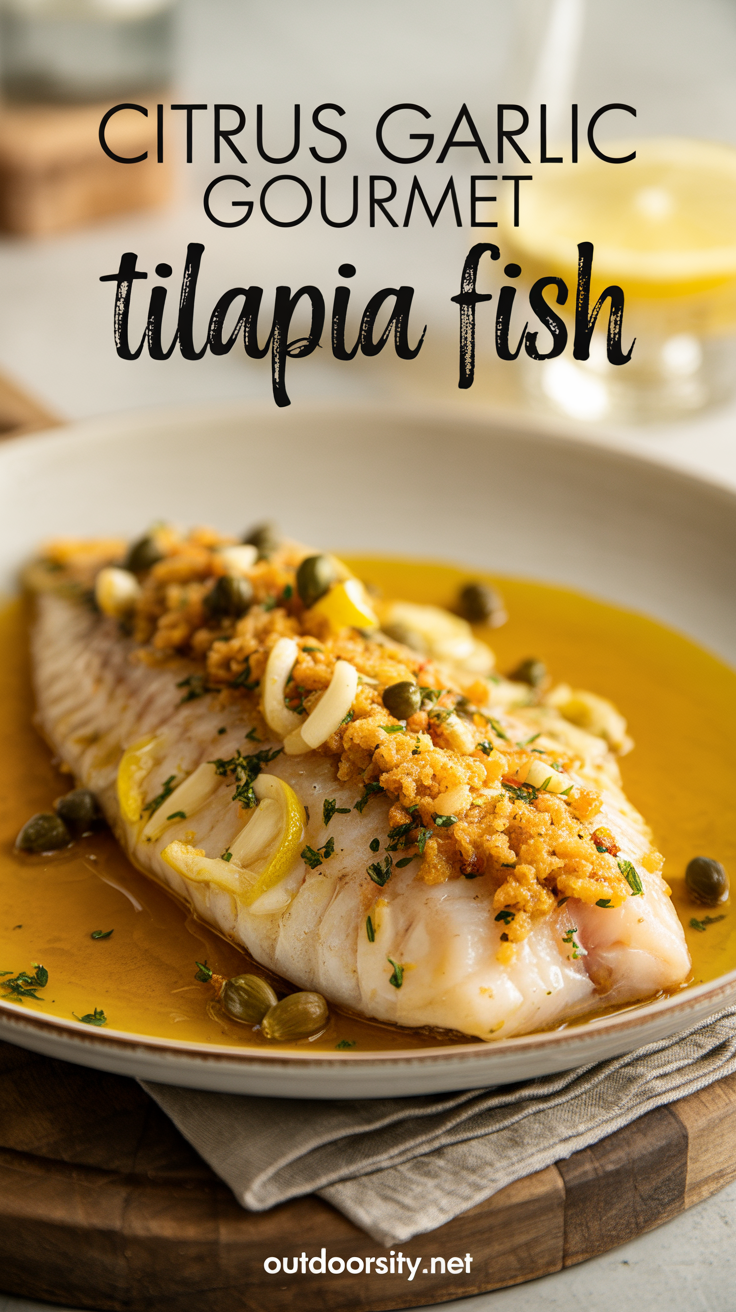
Equipment: Nice-to-haves
- Microplane zester (turns peel into fragrant confetti)
- Citrus juicer (no seeds, no stress, just juice)
- Pastry brush (paint that glaze like a culinary Picasso)
- Instant-read thermometer (for perfect doneness at 145°F)
- Fish spatula (sleek lift, zero crumble)
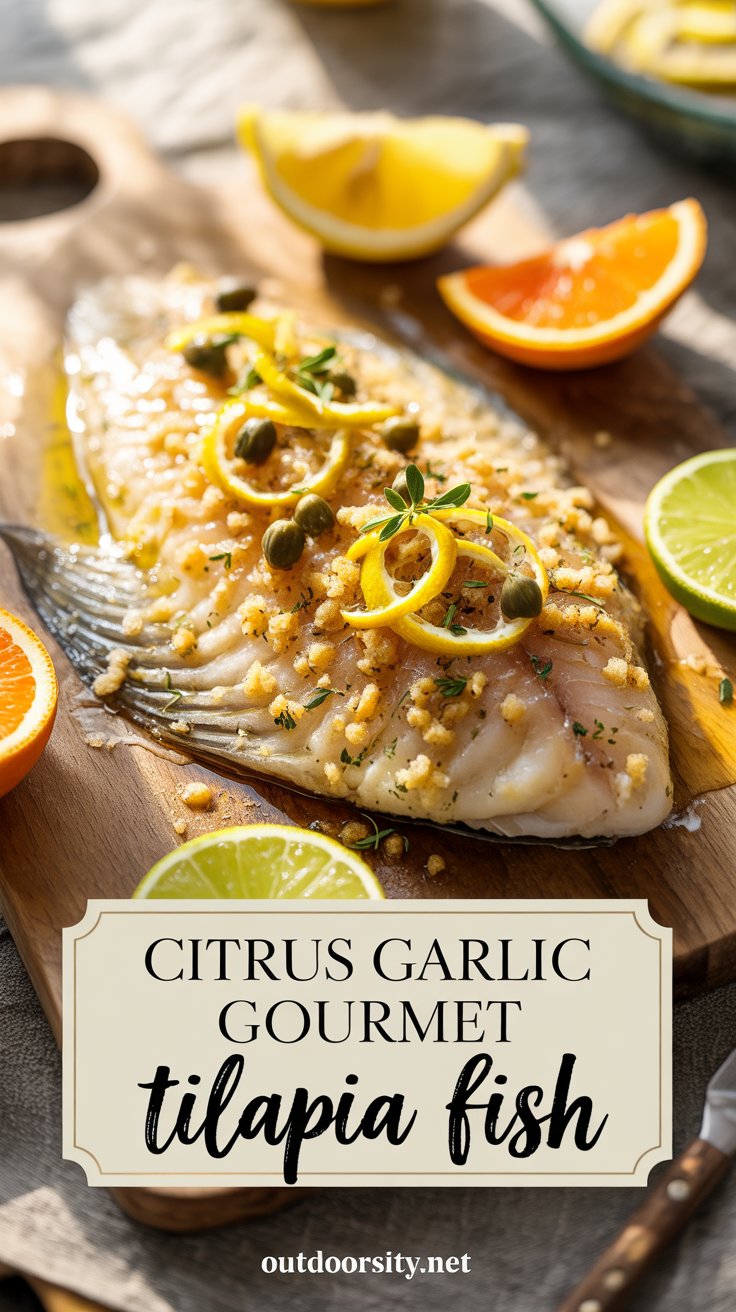
Ingredients
- 1 tilapia fillet, about 6–8 oz (fresh or thawed, patted dry)
- 1 tablespoon olive oil or melted unsalted butter (follow your heart)
- 1 lemon, zested and juiced (bright and zippy)
- 1/2 orange, zested and juiced (sweet sunshine)
- 1/2 lime, zested and juiced (a little tangy wink)
- 2 garlic cloves, finely minced or microplaned (vampires hate this)
- 1 teaspoon Dijon mustard (optional, for grown-up tang)
- 1 teaspoon honey or maple syrup (balances the acidity)
- 1/4 teaspoon kosher salt (season like you mean it)
- 1/8 teaspoon black pepper (tiny kick)
- 1/4 teaspoon crushed red pepper flakes (optional heat)
- 1 tablespoon fresh parsley, finely chopped (green confetti)
- 1 teaspoon capers, drained (optional, salty pop)
- 1 tablespoon panko breadcrumbs (optional, gentle crunch)
- 1 teaspoon olive oil or cooking spray (for the pan)
- 1 lemon wedge, for serving (last-minute sparkle)
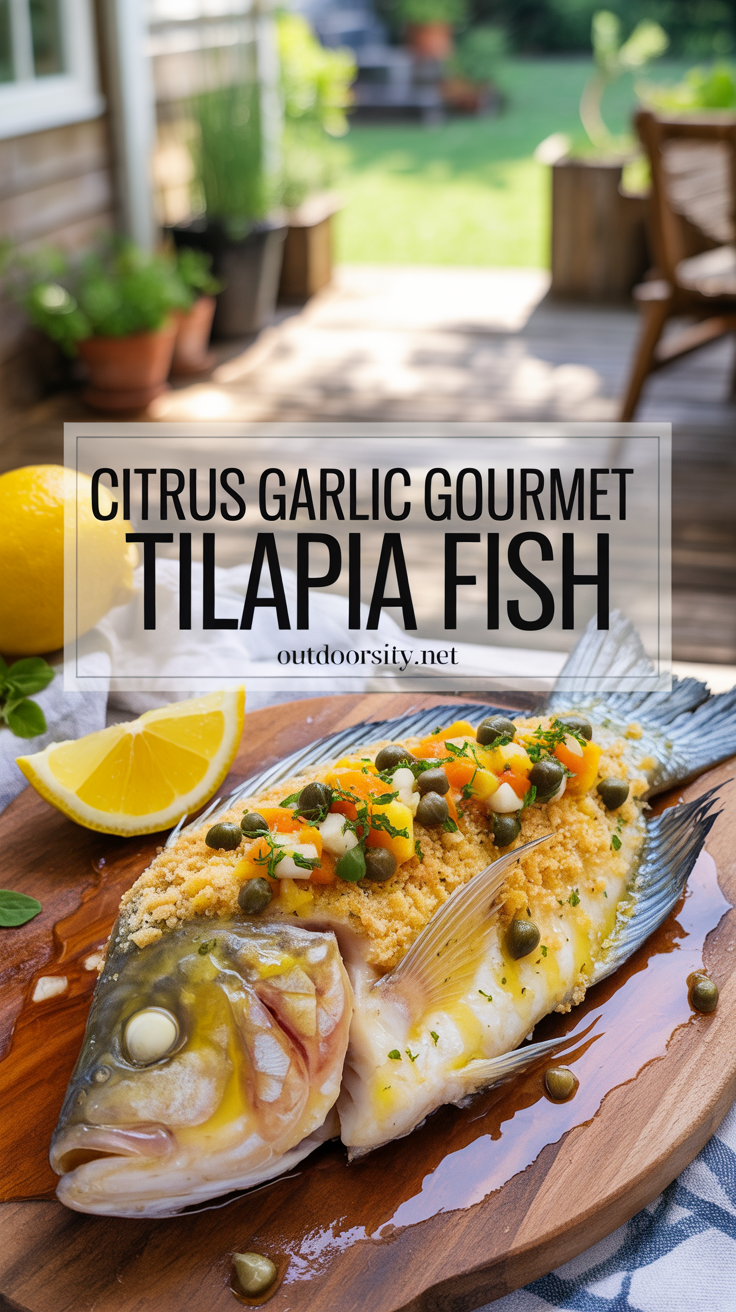
Instructions
- Preheat the oven to 400°F and line a baking sheet with parchment or foil; lightly coat it with oil or cooking spray so nothing sticks when the applause starts.
- Set the tilapia on a cutting board and pat it very dry with a paper towel; dry fish turns extra golden, like it just got back from vacation.
- Zest the lemon, orange, and lime with a microplane zester if you have one; then juice them with a citrus juicer and keep the seeds out because nobody ordered a crunchy surprise.
- In a small bowl, use a spoon to whisk together the oil or butter, garlic, mustard, honey, salt, pepper, and red pepper flakes; splash in most of the citrus juice and some zest until it smells like a beach with good boundaries.
- Sprinkle the fish with a pinch of salt and pepper measured with your measuring spoons, then place it on the lined sheet; if it’s shy, nudge it gently to the middle.
- Spoon or brush the citrus-garlic mixture over the top and sides using a pastry brush or spoon; let a little pool form around the fillet so it bastes while baking.
- If you like a touch of crunch, scatter panko on top and press very lightly so it clings; dot capers over the surface for a fancy salty sparkle.
- Slide the sheet into the oven and bake at 400°F for 10–12 minutes, depending on thickness; the fish is ready when it flakes easily and reads about 145°F on an instant-read thermometer.
- For extra color, switch to broil on high for 60 seconds at the end, watching closely like it’s the season finale; don’t let it burn or it’ll get dramatic.
- Remove from the oven, spoon the pan juices over the fish, sprinkle on the remaining zest and the chopped parsley, and finish with a squeeze from the lemon wedge; let it rest for 2 minutes so the juices settle.
- Lift carefully with a fish spatula and plate with any remaining sauce; inhale that citrus cloud and pretend you have a reservation under your own name.
Substitutions
Need a swap to match what’s in your kitchen or your diet? Here are a few clever substitutions to keep the citrus-garlic magic alive.
- Use cod or swai in place of tilapia if needed; keep the same method and doneness cues.
- Swap butter with extra-virgin olive oil for a dairy-free version that’s just as silky.
- No Dijon? A small spoon of whole-grain mustard or a squeeze of lemon plus a pinch of salt steps in nicely.
- Out of honey? Try maple syrup or a tiny bit of agave to balance the citrus.
- Skip panko for gluten-free; a light dusting of almond flour or none at all still tastes great.
- No parsley? Finish with chopped cilantro or a few leaves of basil for a fresh twist.
- Missing capers? A few minced olives or a splash of brine from a jar of pickles gives a similar salty spark.
What to Serve With It
Pair it with fluffy couscous or lemony quinoa to soak up those citrusy pan juices. A side of roasted asparagus or green beans keeps the plate bright and snappy.
If you like a little color party, serve with a quick mango or pineapple salsa for sweet contrast. The tilapia’s garlic notes love that fruity pop.
Sip a crisp, chilled Sauvignon Blanc or a bubbly lime seltzer with crushed mint. The acidity keeps each bite feeling fresh and breezy.
What Else You Should Know
For a dairy-free route, use all olive oil and skip butter; the citrus and garlic still deliver big flavor. Want gluten-free?
Leave off the panko and you’ll keep the crisp edges thanks to a hot sheet and a quick broil. If you can, choose responsibly sourced tilapia; many markets label sustainable options, and the flavor is cleaner and sweeter.
Patting the fish dry before baking makes a real difference in texture. Make the marinade in the morning and stash it covered in the fridge; it keeps the citrus bright and the garlic mellow.
Brush it on right before baking so the acid doesn’t over-marinate the surface. Leftovers store in an airtight container for up to two days; reheat gently in a low oven or a covered skillet with a splash of citrus juice to keep it tender.
Cold flaked fish also makes a great salad topper with extra squeeze of lemon.
